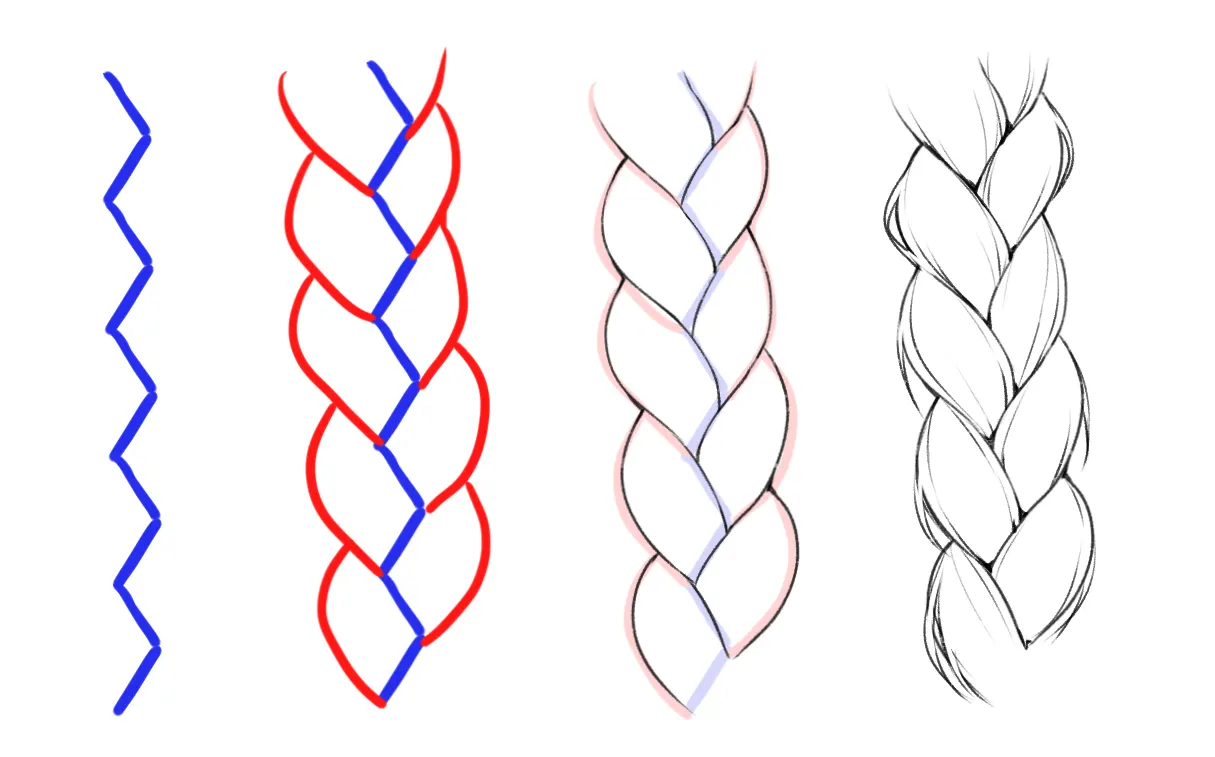
In high-end real-time game development, rendering hundreds of thousands of individual dynamic hair splines remains computationally prohibitive for complex open-world scenes. Studios bridge this performance gap using a dedicated 3D haircard workflow. A breakdown detailed by 3D asset platform 80 Level highlights how technical artists model primary braided shapes in ZBrush or Autodesk Maya, convert them to guide curves, and drive high-density strand grooms via Maya's XGen interactive grooming toolset.
Rather than laying down thousands of separate geometric strands, artists generate high-density 4K texture sheets containing diffuse, alpha, normal, flow, and depth maps derived from groom baked textures. These maps are applied to low-poly polygon strips, haircards, that twist and conform along the path of the braid.
Achieving realistic depth demands a three-layer strategy. First, artists place wide, solid base haircards to obscure the underlying scalp mesh and block silhouette pass-through. Next, secondary medium cards lay down the primary overlapping braid chunks. Finally, thin "breakaway" or "flyaway" cards sit on the outermost layer, disrupting the clean digital edge with natural frizzy stray hairs.

