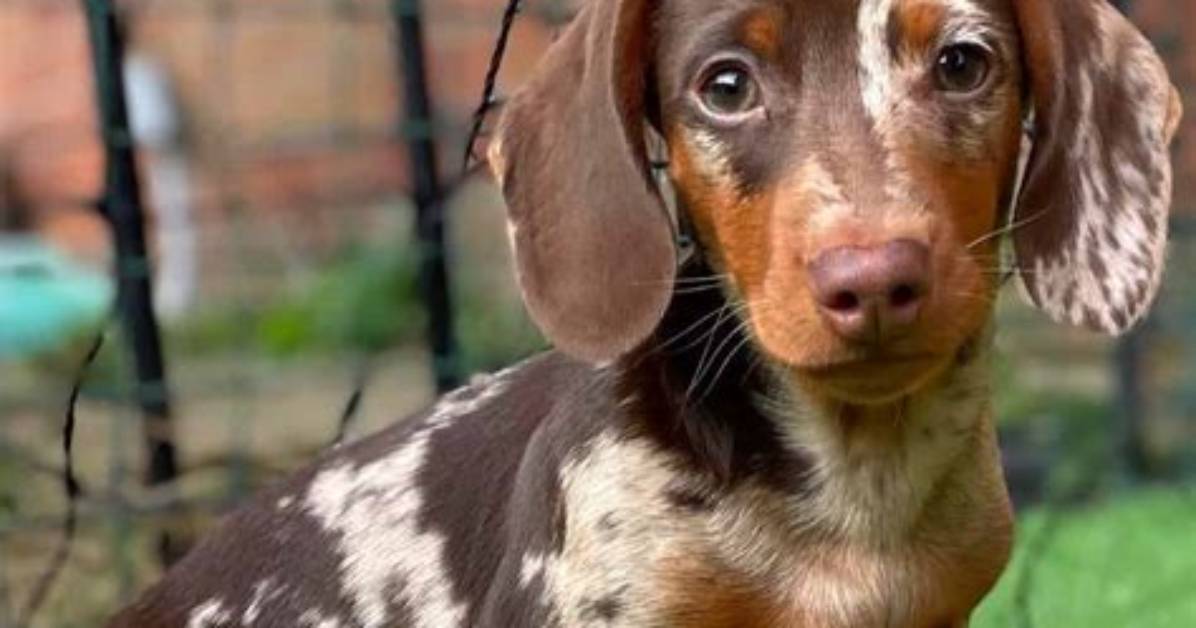
The foundation of any chocolate dapple dachshund starts with pigment chemistry. True chocolate dachshunds lack black pigment entirely. A mutation in the tyrosinase-related protein 1 gene (TYRP1), represented as the recessive b/b genotype, converts all black eumelanin to a warm, rich liver or chocolate brown. Their footpads, eye rims, and noses carry liver tones rather than obsidian black.
The dapple pattern appears when a dominant merle allele on the PMEL gene inserts itself into this foundation. The merle insertion disrupts pigment synthesis during embryonic development. Rather than painting the coat evenly, it creates erratic, jagged patches where the base pigment is diluted into lighter silvery tans, creams, and faded taupes.
When this dilution occurs across a chocolate-and-tan base coat, the visual result is distinctive. Deep cocoa spots mingle with lighter, sun-bleached caramel swirls. Tan points on the muzzle, eyebrows, and paws remain intact, framing the dappled body. To the untrained eye, it looks like an exotic paint job. To a geneticist, it is a deliberate, unstable pigment dilution frozen in place by selective mating.

