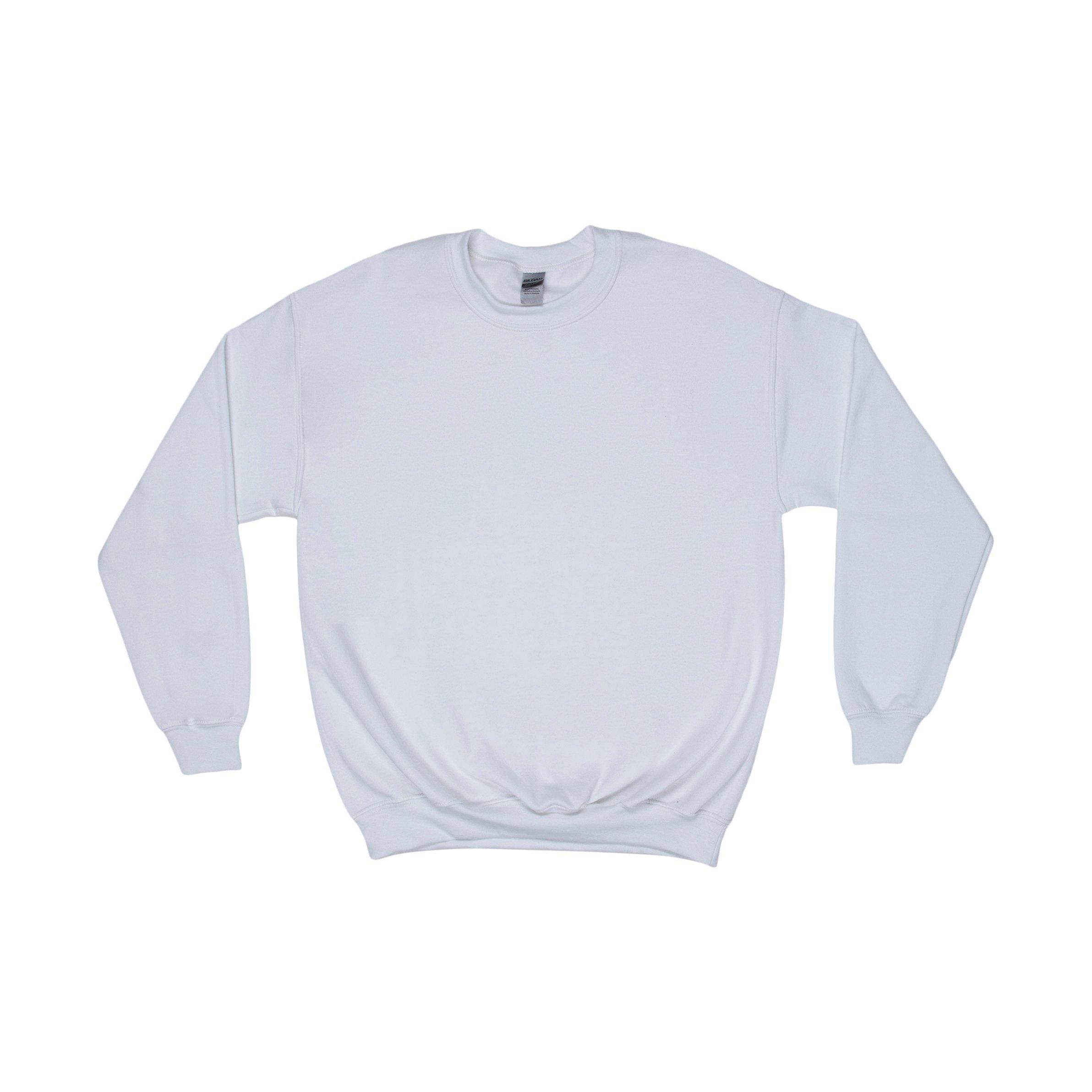
Before choosing a blank, decorators must examine the tag. The standard Gildan 18000 crewneck stocking craft-store shelves is built on an 8.0 oz/yd² fabric weight composed of 50% US cotton and 50% polyester. While this balance offers decent softness and minimizes initial wash shrinkage, it creates clear operational boundaries under thermal heat presses.
For heat transfer vinyl blanks, this 50/50 composition provides a stable, predictable substrate. Polyurethane vinyls bite securely into the open cotton fibers, while the polyester core holds the fleece's overall shape. The air-jet spun yarn common in standard stock reduces surface pilling during initial wears, though high-friction friction zones near the underarms break down rapidly after ten domestic wash cycles.
Where decorators run into major quality failures is sublimation. Sublimation dyes bond exclusively with synthetic polymer chains. When pressed at 385°F, 400°F for 60 seconds onto a 50/50 blend, half the dye attaches to the polyester while the other half rinses out of the cotton fibers during the very first cold wash. The result is not a crisp, vibrant graphic, but a muted, dusty-looking print.
Achieving commercial-grade sublimation requires blanks with at least 65% to 100% polyester content. Sourcing standard retail crewnecks for full-color photographic ink transfers inevitably leads to customer returns unless buyers specifically request an aged, distressed finish.

