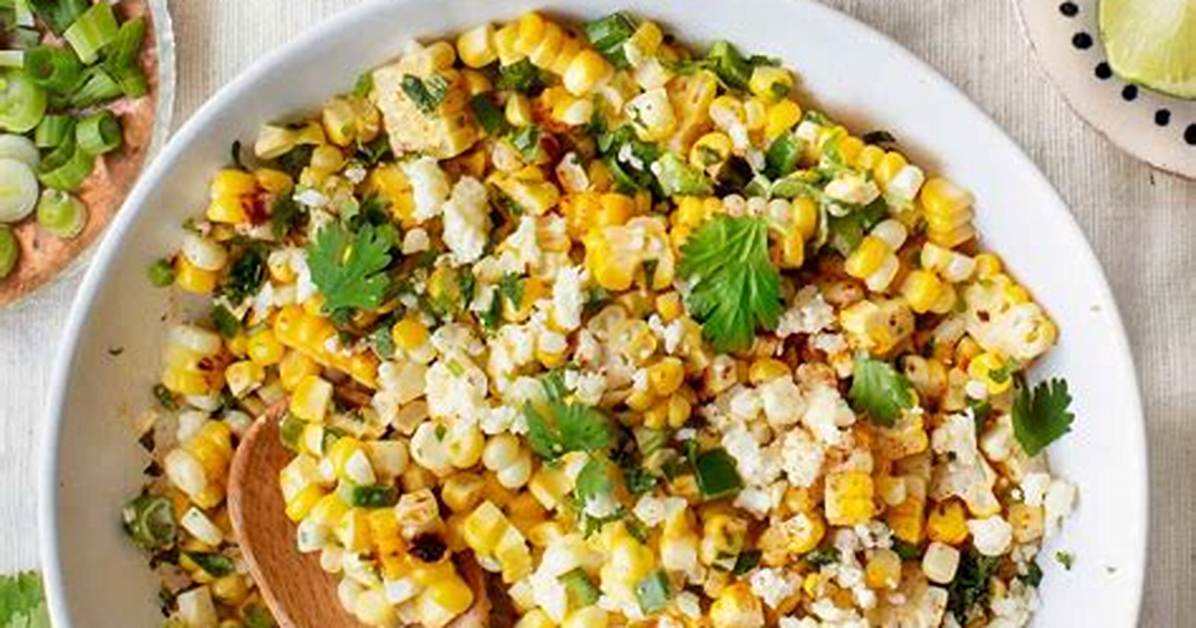
Street food in central Mexico is an exercise in resourcefulness. The word esquites originates from the Nahuatl term ízquitl, which translates roughly to toasted corn. Historically, dried native maize was pan-toasted on clay comales with epazote, an aromatic herb with notes of citrus, mint, and petroleum. That ancient staple evolved into modern elote salad, shifting as European dairy and commercial mayonnaise infiltrated Mexican food culture during the mid-twentieth century.
Street carts in central Mexico still simmer their corn kernels with epazote and chicken feet to produce a rich, gelatinous stock. Vendors ladle hot corn into paper cups before layering dollops of mayonnaise, crema, salty cheese, ground dried chiles, and a squeeze of lime. In Northern Mexico and across the American Southwest, cooks frequently bypass the broth, opting to char the kernels directly over mesquite coals or in hot cast iron. Both styles deliver intense contrast. Sweet kernels burst against funky aged dairy, punctuated by the sting of raw lime juice.

