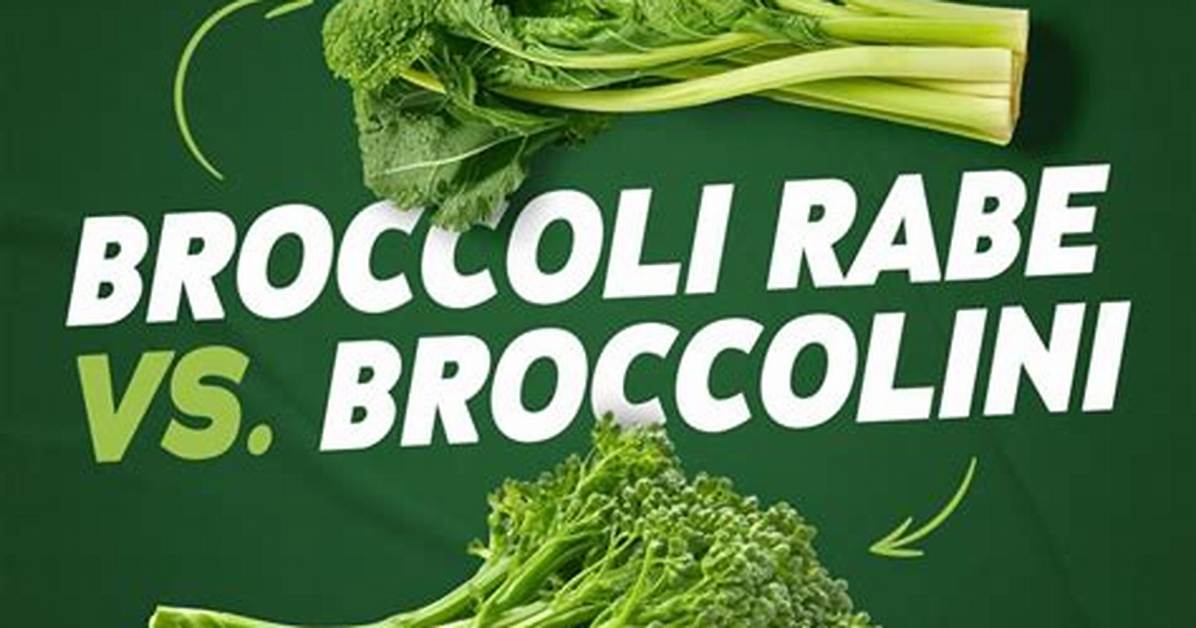
Produce distributors share much of the blame for supermarket confusion. Supermarkets routinely label broccolini as "baby broccoli," leading shoppers to assume field hands simply harvested immature heads of standard Calabrese broccoli. That assumption is flatly incorrect. Standard broccoli harvested early does not yield long, slender, tender stems; it yields tiny, dense crowns on tough stalks.
Broccoli rabe suffers from an even more misleading moniker. Also marketed as rapini, raab, or cime di rapa, the plant is not broccoli at all. It is a leafy, flowering brassica belonging to Brassica rapa, placing its closest genetic kinship beside field turnips, bok choy, and napa cabbage. When shoppers purchase broccoli rabe, they buy the edible flowering tops, tender stems, and jagged foliage of a turnip relative bred specifically for bitter greens rather than root development.
The morphological differences are obvious upon closer inspection. Broccolini features long, uniform, jade-green stalks capped with loose florets reminiscent of miniature standard broccoli heads, carrying virtually no substantial foliage. Broccoli rabe arrives as an abundant bouquet of wide, ragged leaves punctuated by tiny, scattered green bud clusters that look like nascent florets. Cooking them interchangeably without adjusting your flavor balance leads to disastrous meals.

