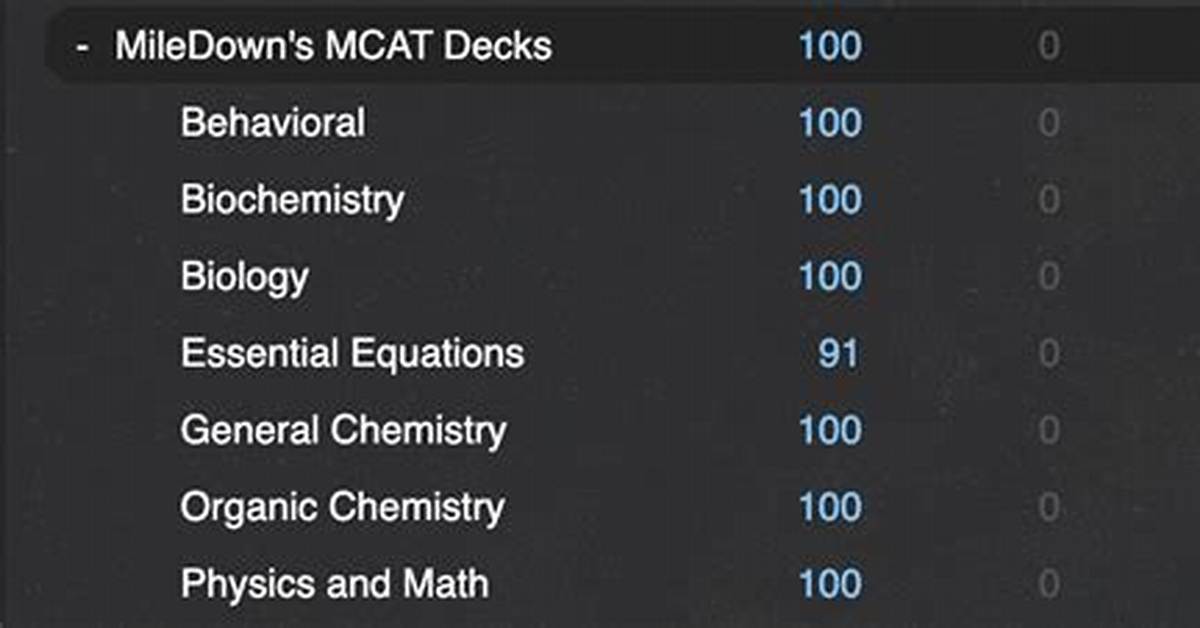
The primary strength of the deck also creates its biggest cognitive pitfall. Cloze deletions make flashcards quick to review, allowing users to finish 300 to 400 cards within an hour. But recognizing a sentence structure differs fundamentally from solving a novel scientific problem.
When an Anki user sees a card repeatedly, the brain quickly latches onto visual context cues, such as a specific diagram, sentence length, or neighboring vocabulary, rather than the underlying scientific concept. A student might instantly recall that the rate-limiting enzyme of glycolysis is phosphofructokinase-1 simply because they recognize the shape of the blank on the card.
The MCAT rarely tests basic definition recall. The exam presents multi-paragraph laboratory experiments featuring strange assays, complex Western blots, and multi-variable graphs. If a student relies solely on cloze deletion flashcards, they risk falling into an illusion of competence. They memorize discrete facts without developing the reasoning skills needed to apply those facts across unfamiliar experimental conditions.

