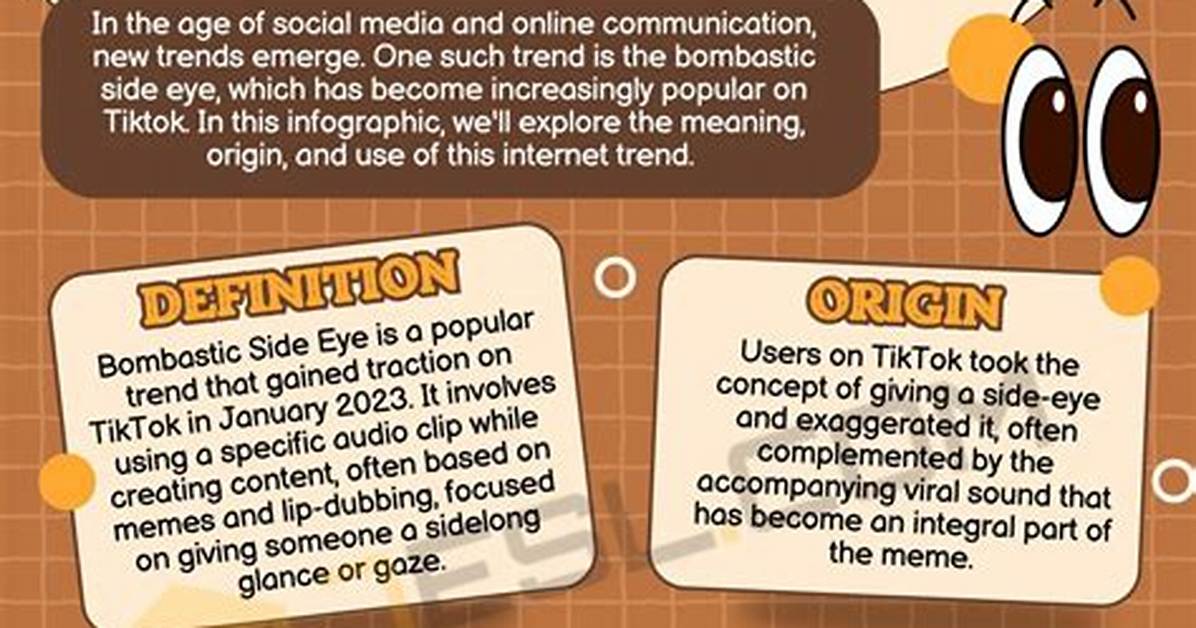
Side-eying has long been a primary currency of digital communication. The transition from silent images to complex audio markers reflects broader shifts across online media ecosystems.
| Phase & Era | Primary Medium | Cultural Driver |
|---|---|---|
| Historical Vernacular (Pre-2010s) | Print literature and regional spoken dialects | Describing physical wariness and social disapproval |
| Visual Reaction Era (2012, 2019) | Reaction GIFs, Tumblr screencaps, Twitter stills (e.g., Chloe side-eye) | Static nonverbal reactions to bizarre or offensive commentary |
| Algorithmic Audio Era (2020, 2023) | Short-form audio loops, lipsyncing, creator mashups | Layered parody using Malaika Raja's vocal tracks across varied niches |
| Integrated Slang Era (2024, 2026) | Spoken workplace idioms, subtitle captions, casual dialogue | Permanent vocabulary fixture signaling overt distrust or boundary setting |
This evolution shows a trajectory toward multimodal expression. While an early-2010s internet user might have posted a still image of little Chloe looking sideways from her car seat, modern web participants demand an auditory cadence that punches through phone speakers.

