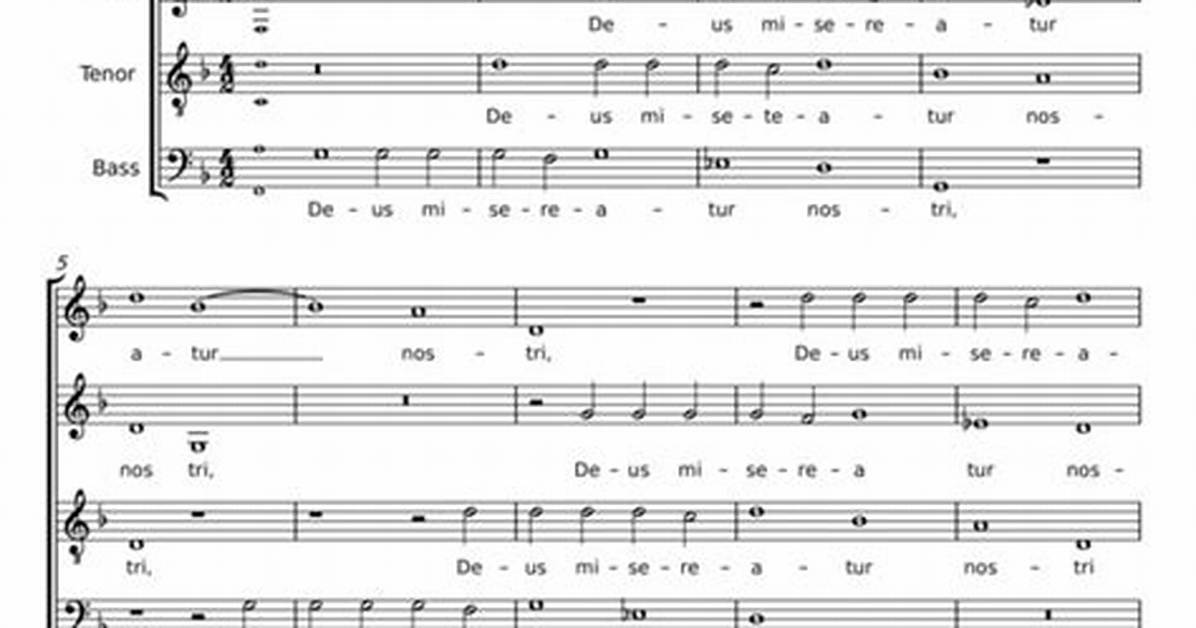
The text of Psalm 67 opens with a direct invocation: "Deus misereatur nostri, et benedicat nobis" ("God be merciful unto us, and bless us, and cause his face to shine upon us"). Unlike the penitential self-reproach found in the Miserere mei of Psalm 51, Psalm 67 carries an expansive, communal warmth. It asks for divine favor not merely for personal absolution, but so that spiritual equity might reach every nation across the earth.
That balance made the text an indispensable fixture across competing Christian traditions. In sixteenth-century England, the compilers of the 1552 Book of Common Prayer designated the psalm as an alternate liturgical canticle to the Nunc Dimittis during Evening Prayer. When sung at Evensong, the canticle balanced solemn confession with communal assurance. Meanwhile, across continental Europe, Roman Catholic masters saw the Latin psalm settings as a flexible canvas for expansive vocal textures. Composing for five, six, or eight independent parts, Renaissance polyphonists exploited the psalm's recurring refrains to create intricate echo effects and sudden harmonic shifts that filled cathedral vaults.

