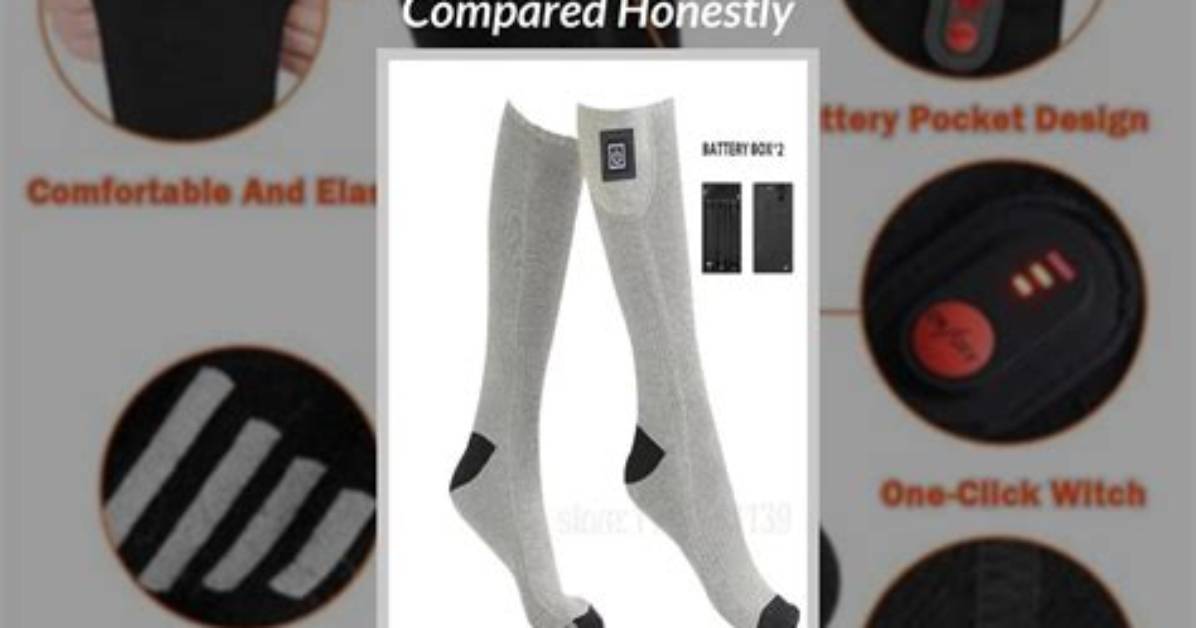
Early heated footwear was notorious for mechanical failure. First-generation electric socks embedded stiff alloy wires directly beneath the ball of the foot. Walking applied continuous friction and repetitive mechanical pressure against those brittle filaments, snapping the internal circuits after a handful of outings. Worse, concentrated resistance points frequently burned the skin while leaving the rest of the foot freezing.
Contemporary cold-weather apparel has largely replaced copper lines with hair-thin carbon fiber heating elements and micro-alloy composite ribbons. Instead of laying wires across high-impact footbeds where body weight crushes them, engineers now route heating channels around the perimeter of the toes and over the top of the forefoot. Because cold feet circulation shuts down from the tips of the digits inward, delivering ambient warmth across the capillary beds of the toes keeps peripheral blood flowing naturally.
Top-tier electric ski socks integrate these micro-filaments directly between knitted yarn layers, preventing abrasive contact with the skin while protecting the electronics from kinetic wear. When paired with high-grade synthetic elastane, the textile moves naturally during heavy exertion, eliminating the stiff, restrictive sensation that previously plagued battery-powered outdoor garments.

