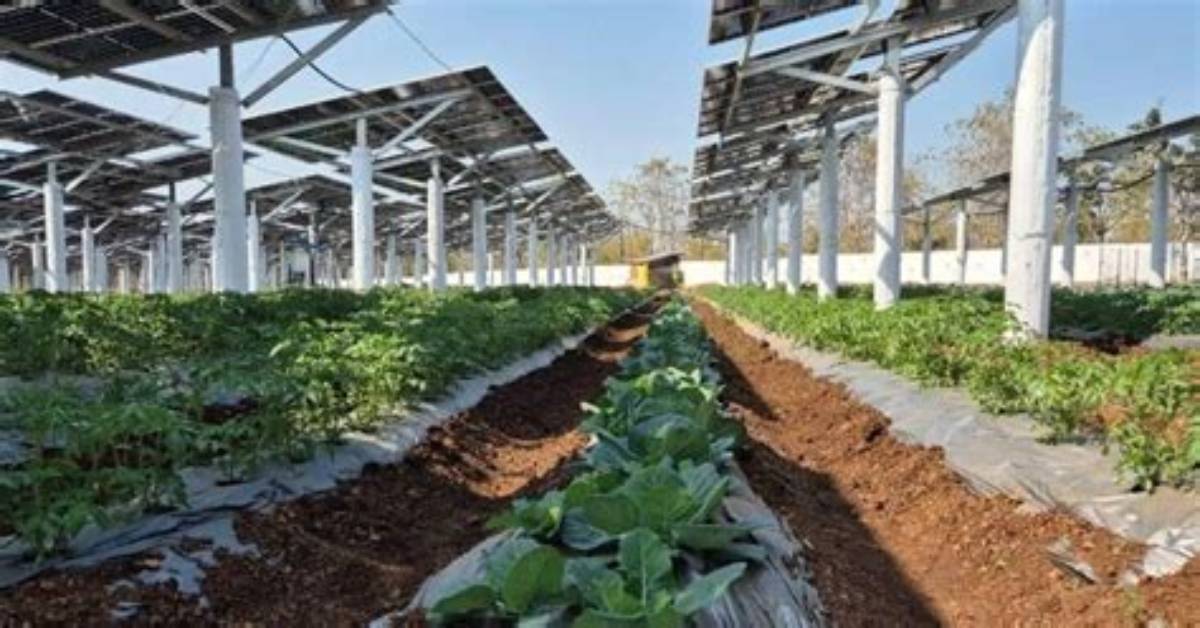
Excessive sunlight is not always an asset for food production. Once ambient temperatures surpass critical biological thresholds, many vegetable crops close their stomata to prevent dehydration, halting photosynthesis entirely. Heavy direct sunlight scorches fruit, degrades marketable appearance, and forces commercial growers to pump scarce groundwater continuously.
Agrivoltaic arrays create dynamic microclimates that intercept peak afternoon radiation. High-value crops such as lettuces, brassicas, solanaceous plants, and berries benefit immediately from intermittent shading. The panels reduce soil surface temperatures by 5°C, 9°C during mid-day spikes. Moisture remains locked in the root zone longer, reducing irrigation management stress and preventing the rapid leaf burn that ruins commercial harvest values. Rather than losing volume, shade-tolerant and temperate crops under partial panels frequently match or exceed baseline open-field yields while demanding far less pumped water.

