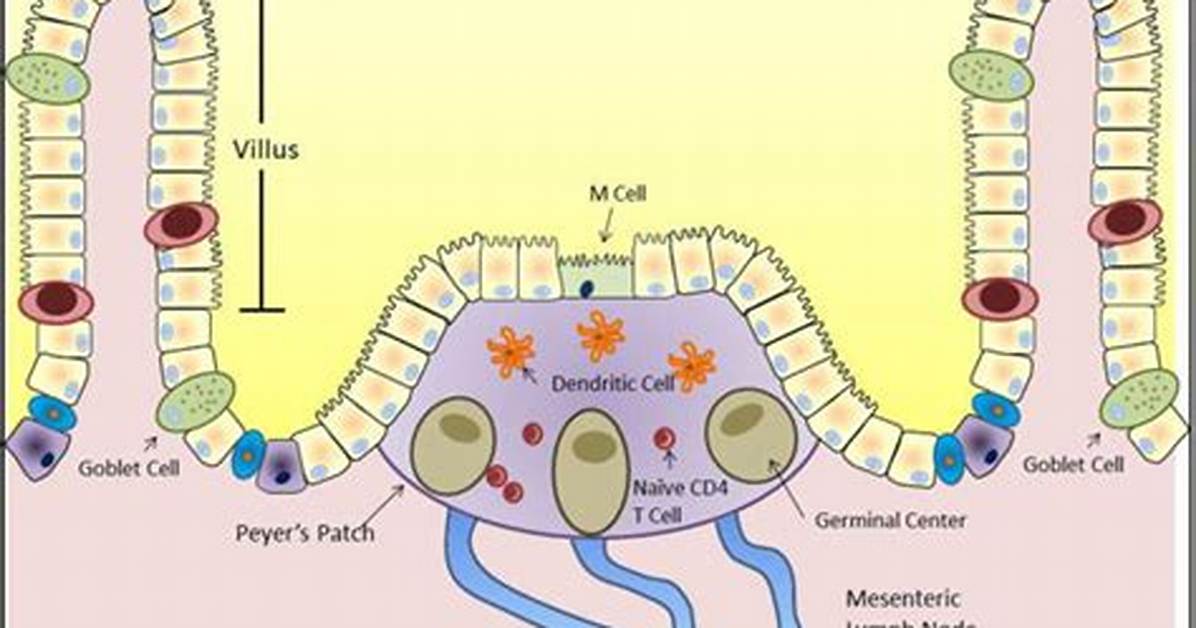
The gut encounters hundreds of grams of foreign food proteins every single day. If the immune system treated every peanut protein, egg albumin molecule, or gluten peptide as an attacking organism, systemic anaphylaxis and chronic intestinal inflammation would quickly overwhelm the host. The default setting of a healthy gut is not attack; it is oral tolerance.
For years, researchers debated where oral tolerance actually begins. Some pointed exclusively to the mesenteric lymph nodes, arguing that Peyer’s patches focused solely on infectious pathogens. Definitive work published in the Proceedings of the National Academy of Sciences (PNAS) settled this dispute, demonstrating that Peyer's patches are strictly required for the induction of oral tolerance to soluble dietary proteins.
When researchers engineered models lacking Peyer’s patches, systemic unresponsiveness to fed antigens collapsed. Without the patch's unique antigen-sampling machinery, feeding foreign proteins failed to induce systemic anergy or generate the regulatory T cells (Tregs) needed to quiet peripheral immune responses.
The microenvironment inside Peyer's patches processes soluble food antigens differently from particulate microbes. Specialized CD103+ dendritic cells inside the subepithelial dome take up dietary proteins from M cells without inflammatory signals, prompting naïve CD4+ T cells to express Foxp3. These antigen-specific Tregs then leave the patch and circulate systemically. If that same protein appears later in peripheral tissues or the bloodstream, these Tregs suppress effector responses, preventing allergic hypersensitivity and food-driven autoimmunity.

