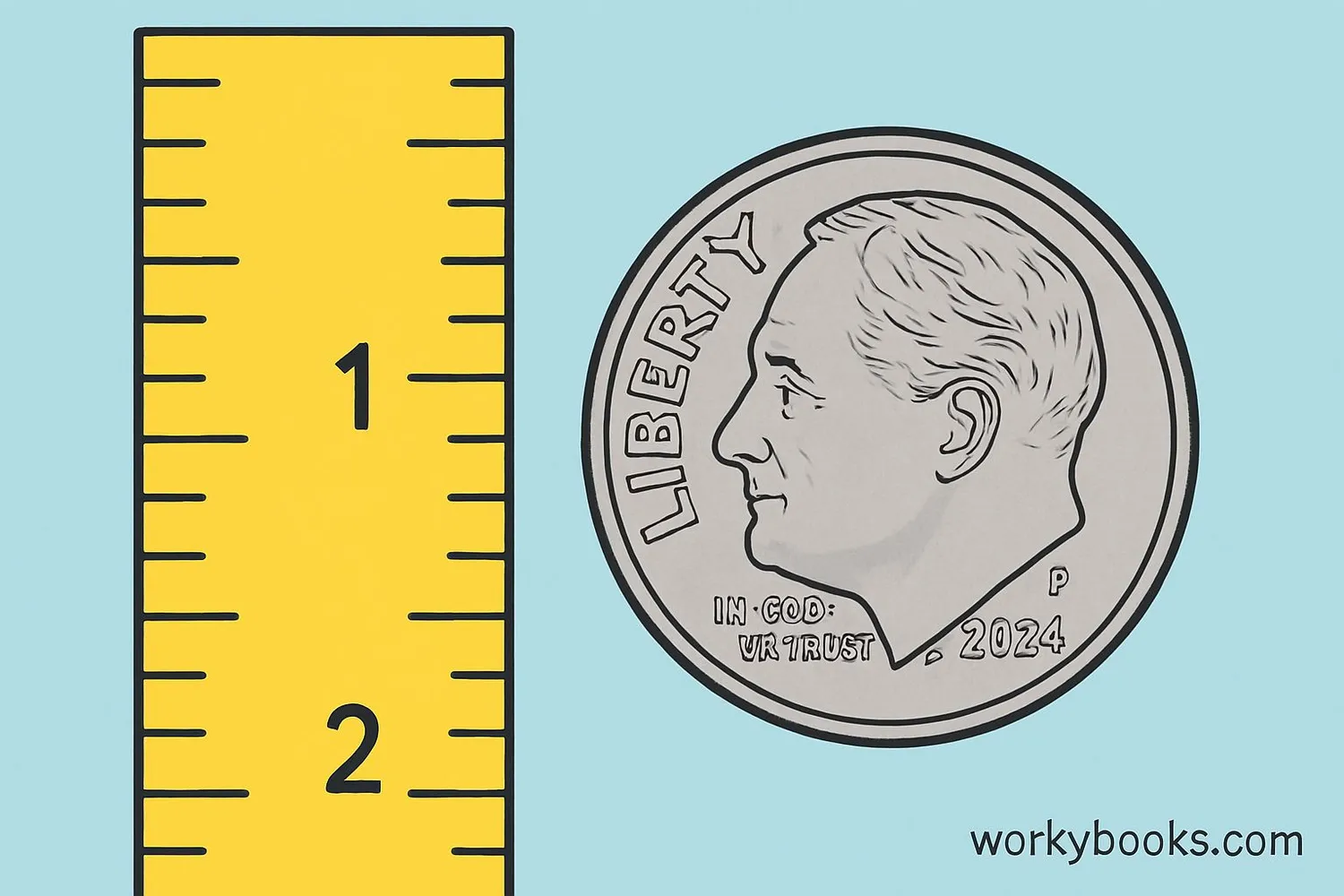
To most casual observers, financial hierarchy suggests size hierarchy. A dime represents ten cents, yet it is visibly smaller than the one-cent coin. The one-cent penny spans 0.750 inches (19.05 mm), making it 0.045 inches wider than the dime. This historical oddity roots itself directly in precious metal parity established by the Coinage Act of 1792.
Alexander Hamilton and early Treasury officials tied coin dimensions directly to intrinsic metallic value. Pennies contained base copper, requiring substantial size to equal one-hundredth of a dollar's purchasing power. Dimes, by contrast, were struck from 90% fine silver. A silver dime had to contain exactly one-tenth the silver weight of a silver dollar. Because silver held vastly higher purchasing density than copper, the dime was struck small to keep its intrinsic metal value equal to its face value.
When Congress eliminated silver from circulating dimes in 1965 due to rising commodity prices, the Treasury deliberately maintained the historical 0.705-inch footprint. Changing the diameter would have forced the complete overhaul of millions of coin-operated vending machines, parking meters, and turnstiles across North America.

