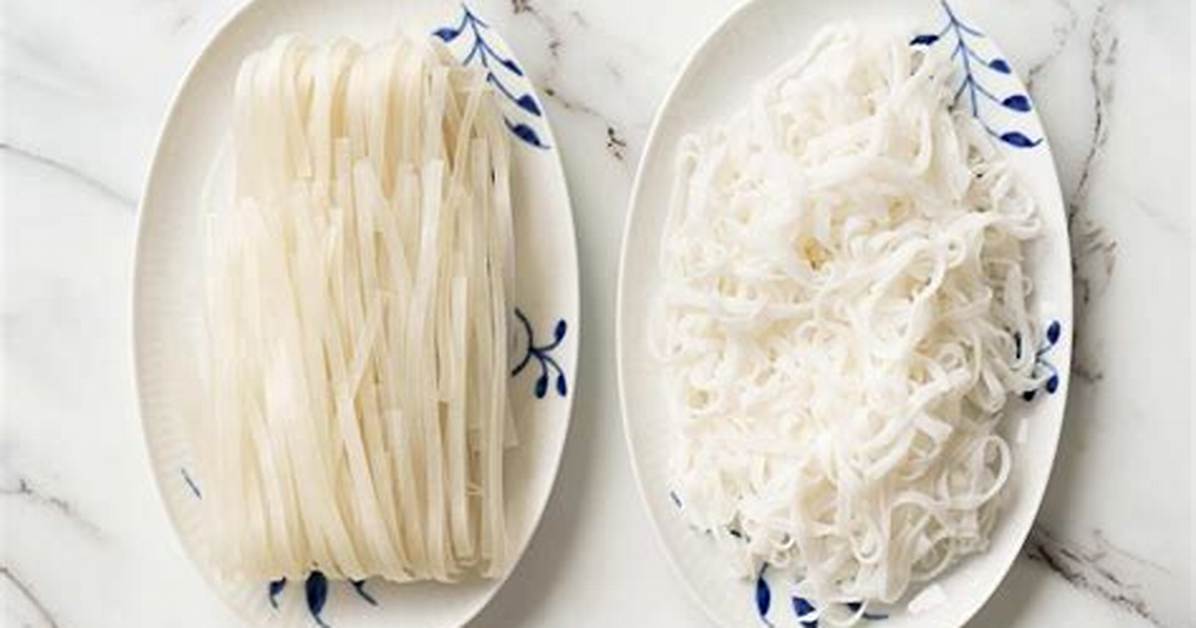
Not every noodle handles every cooking medium with equal grace. Matching noodle hydration to your cooking liquid determines whether the final plate succeeds.
Stir-fried street noodles like pad see ew and pad kee mao demand wide rice noodles with immediate surface contact. Fresh sheets excel here. Their higher moisture lets them sear against the metal, developing blistered edges and capturing smoky flavor before the interior dries out. If fresh ribbons feel stiff straight from the refrigerator, microwave them for 30 to 60 seconds rather than boiling them. Gentle ambient heat softens the congealed fats and relaxes the starch chains without adding excess water.
Soups and braises operate under inverse physical constraints. Submerging fresh noodles into a simmering khao soi broth or a rich phở broth can cloud the soup and cause the ribbons to disintegrate within minutes. Dried rice stick noodles shine in soups. Rehydrated until pliable and then submerged in boiling broth for just 20 to 30 seconds right before serving, they retain a firm, distinct bite that holds up through the final slurp.
For cold preparations, such as Vietnamese bún bowls or chilled sesame noodle salads, medium-gauge dried vermicelli is the superior choice. Once soaked and quickly blanched, rinsing them under ice water strips away excess surface amylose. The noodles stay distinct, bouncy, and ready to absorb sharp vinegars and fish sauce without clumping.

