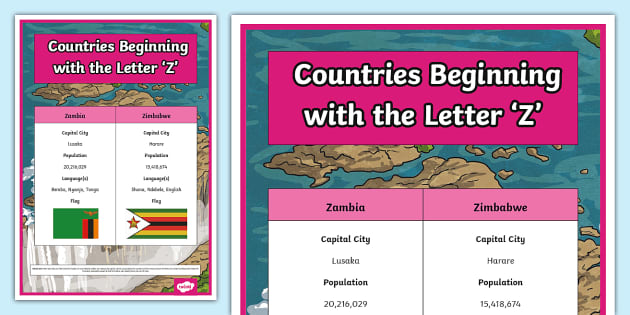
Any comprehensive geopolitical review of the letter Z must address two entities that once occupied prominent places in global atlases: Zaire and Zanzibar.
In October 1971, General Mobutu Sese Seko launched his radical cultural policy of Authenticité across the former Belgian Congo. Mobutu ordered citizens to drop Christian names in favor of traditional African titles, abandoned European dress codes, and renamed the state the Republic of Zaire. The Congo River became the Zaire River, and the national currency became the zaïre.
Mobutu claimed the term was an authentic indigenous word. Ironically, linguistic research proved it was a sixteenth-century Portuguese mispronunciation of the Kikongo term nzere or nzadi, which meant "river swallowing all rivers." When Laurent-Désiré Kabila’s rebel alliance toppled Mobutu in May 1997, one of his first executive decrees was to strike Zaire from the global map, immediately restoring the country's pre-1971 name: the Democratic Republic of the Congo.
Meanwhile, the Indian Ocean archipelago of Zanzibar gained independence from the United Kingdom as a constitutional sultanate on December 10, 1963. Just a month later, in January 1964, a violent revolution led by the Afro-Shirazi Party overthrew the Arab ruling dynasty, establishing the People's Republic of Zanzibar. The sovereign Z republic lasted barely three months. Facing regional Cold War pressures, Zanzibar's leaders signed an Act of Union with neighboring mainland Tanganyika on April 26, 1964. The leaders blended the first syllables of both republics to form a new federal state: Tanzania. Zanzibar remains an autonomous region with its own president and legislature, but it no longer holds a separate seat at the United Nations.

