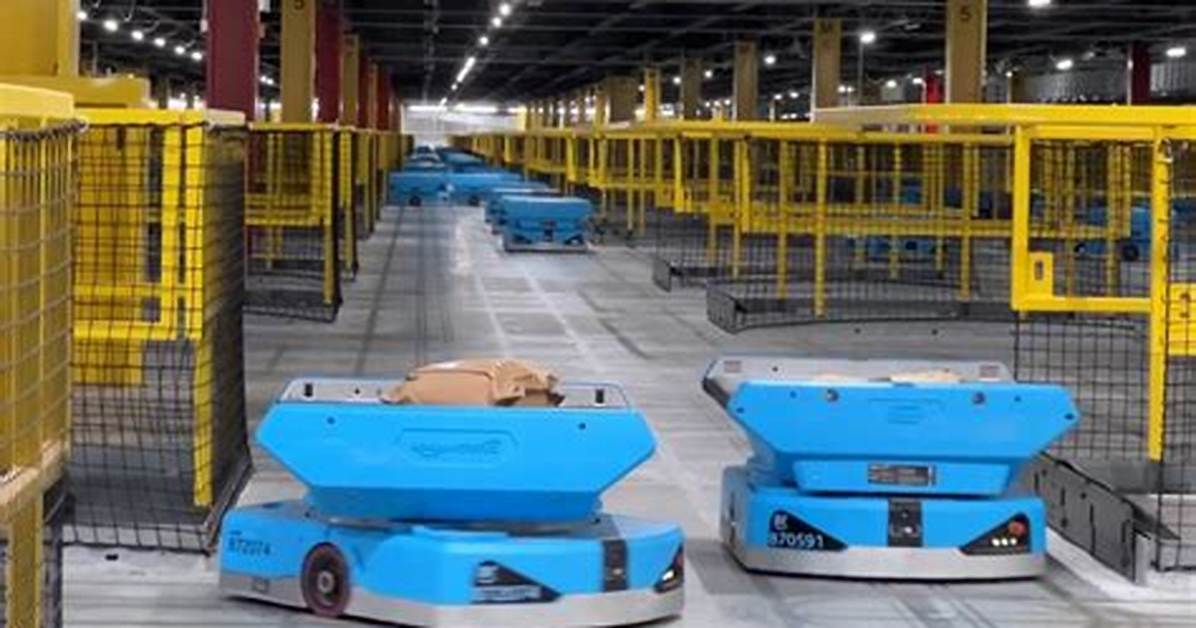
For over a decade, fixed conveyor belts carried the burden of moving totes through cavernous facilities. While efficient at moving cargo in fixed straight lines, fixed conveyors present rigid operational bottlenecks. If a single roller fails or a tote jams on an overhead spur, entire mezzanine levels can grind to an abrupt halt.
Enter the Proteus autonomous mobile robot. Unlike early robotic drive units restricted to fenced-off "robotics only" zones, Proteus operates directly in shared human workspaces. It moves smoothly beneath specialized carts and tote stacks, lifts them using an internal hydraulic system, and transports them across the fulfillment floor. The newest iteration deployed across European fulfillment centers incorporates natural language AI navigation. Human operators no longer need handheld dispatch terminals to redirect robot runners; warehouse floor leads can speak simple situational commands, such as directing a unit to bypass a congested pack line, and the robot processes the acoustic input, recalculates its spatial route, and diverts the tote load seamlessly.

