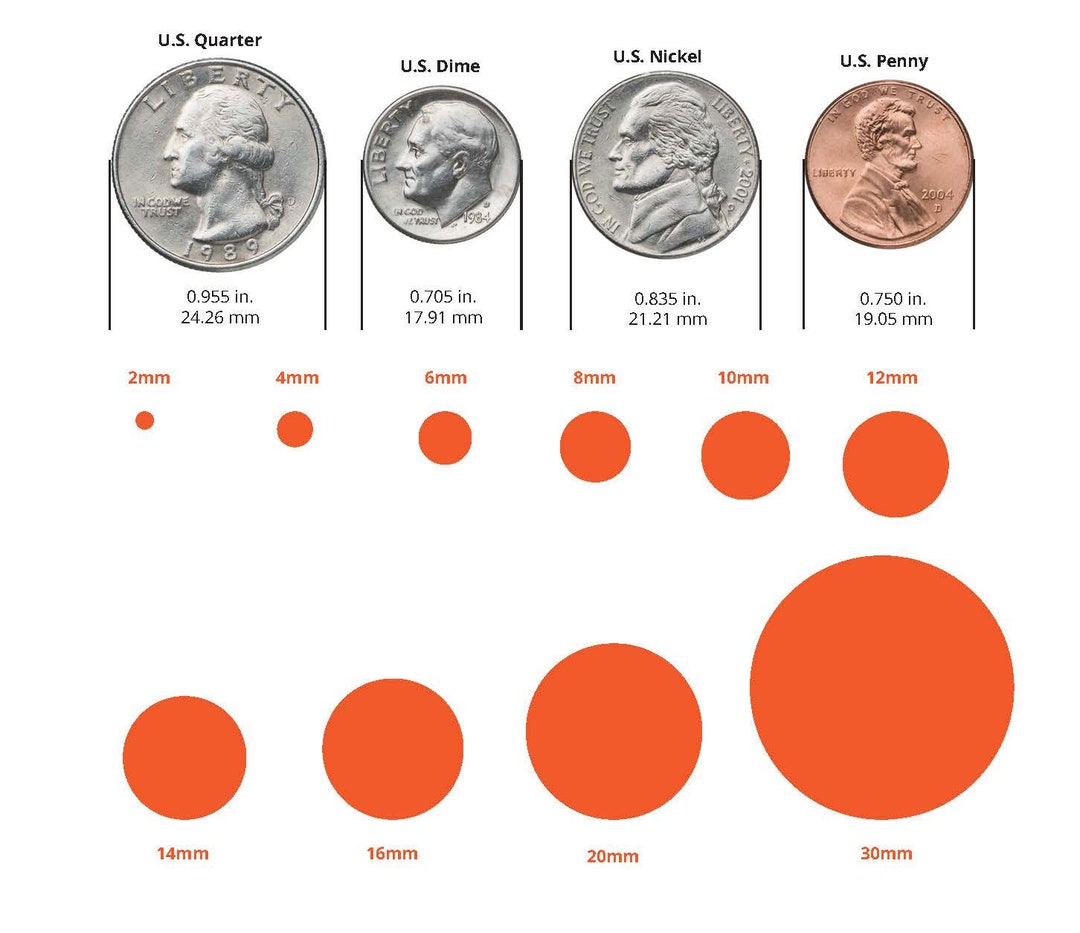
The United States Mint enforces strict physical tolerances across all circulating coinage. The modern ten-cent piece, commonly known as the Roosevelt dime, features a standardized blueprint unchanged in its geometry since Franklin D. Roosevelt first appeared on the coin in 1946.
In metric units, the dime diameter in mm is 17.91 mm. Converted to standard imperial units, that measures 0.705 inches. That makes it slightly under three-quarters of an inch wide.
The thickness of a US dime measures 1.35 mm (0.053 inches). This profile makes it the thinnest coin currently minted for American circulation. Its mass is calibrated to 2.268 grams (0.080 ounces), or roughly 0.005 pounds. If you drop 200 dimes on an analytical scale, the total weight lands at precisely one pound (453.6 grams), barring minor wear from hand-to-hand circulation.
The edge features grooved ridges known to numismatists and mint technicians as reeding. Reeded edge coin details on the dime show exactly 118 vertical reeds running around its perimeter. Originally introduced on precious-metal coins in the eighteenth century to prevent thieves from shaving precious silver off the sides, the reeds now serve as a tactile identifier for visually impaired individuals and an anti-counterfeiting measure in automated sorting machinery.

