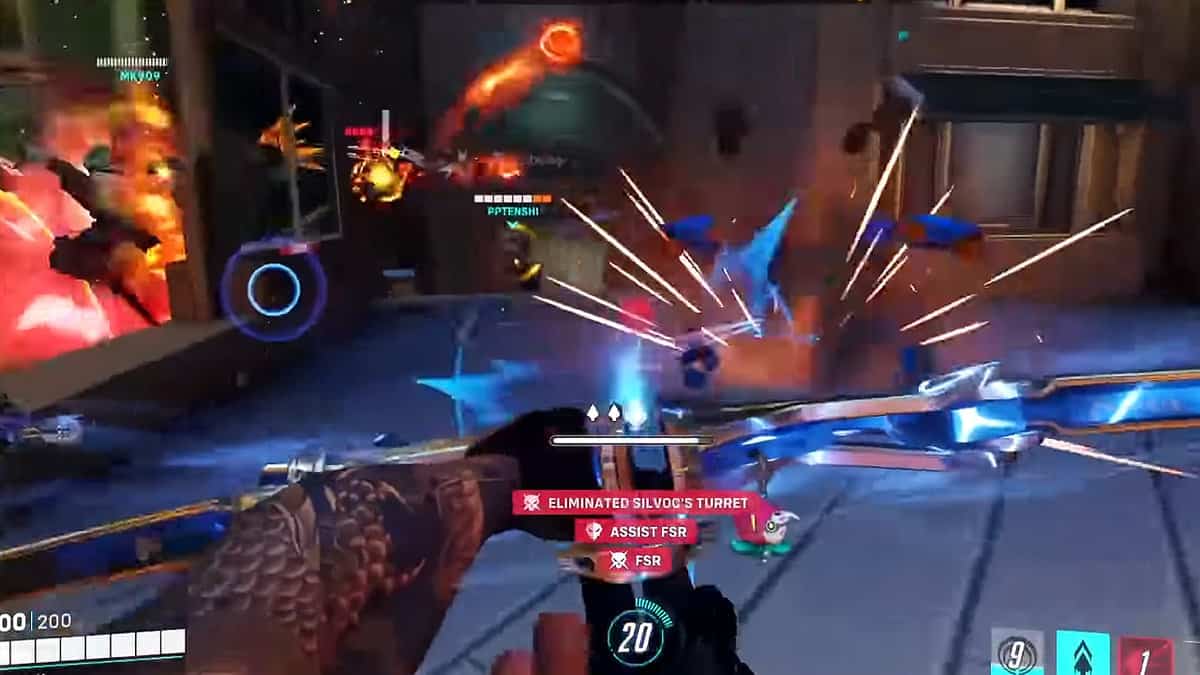
Hydron built his competitive identity on raw hitscan execution. From his breakout seasons with American Tornado to starting roles on the Florida Mayhem and Toronto Defiant, his mechanical identity required handling rapid visual clutter without losing target tracking precision. Modern competitive Overwatch features explosive particle effects, dynamic shields, and hyper-mobile dive compositions that easily obscure subtle character movements.
A player's crosshair acts as an anchor point for focal vision. Human eyes lock onto high-contrast focal points, but an oversized or flashing sight obscures the micro-movements of opposing heroes. Hydron selects a setup that balances rapid spatial acquisition against pixel-level clarity. He does not use wide bloom reticles or bulky circles; his profile stays fixed, compact, and unobtrusive.
Elite hitscan competitors treat their reticle as a subtle confirmation point rather than a primary tracking mechanism. The goal is looking directly through the crosshair at the opponent's neck and head area, letting subconscious hand-eye coordination handle alignment. A setup that is even slightly too thick can hide an enemy Ana's head hitbox at 35 meters, turning a match-winning pick into a missed shot.

