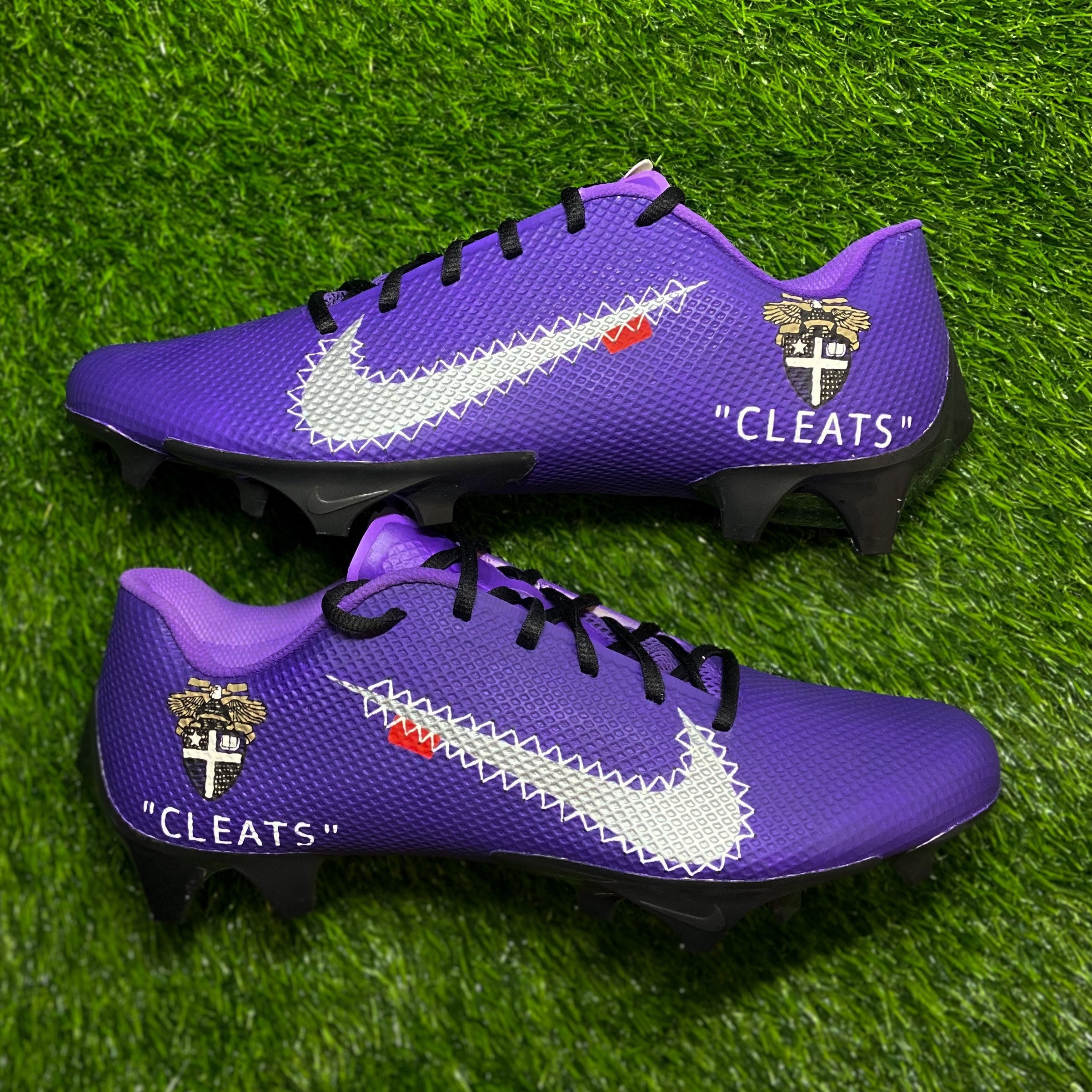
Early custom designs were strictly cosmetic. Artists cleaned retail uppers with acetone, applied thin acrylic coats, and heat-set the pigments. While visually striking, paint added weight, cracked under foot flexing, and offered zero performance advantages. Over the past two seasons, the cleat customization process has undergone a full-scale industrial transformation.
| Production Era | Customization Method | Traction & Plate Tech | Durability Window |
|---|---|---|---|
| 2016, 2019 | External acrylic paint, airbrushing, vinyl stencils | Standard injection-molded TPU retail plates | Pregame warm-ups only (cracking within 1, 2 quarters) |
| 2020, 2023 | Direct-to-garment prints, hybrid upper sole-swaps | Modified carbon fiber inserts, glued hybrid outsoles | 1, 3 games before delamination risks arise |
| 2024, 2026 | Digital knit sublimation, foot scan technology, bespoke lasts | 3D printed lattice plates, algorithm-driven turf traction | Full-season structural integrity with factory warranties |
Today, the cutting edge of personalized football spikes is driven by biomechanical laboratories. Major footwear suppliers capture granular data on an athlete's cut angles, sprint acceleration, and foot pressure distribution. As demonstrated by Adidas custom cleats developed using algorithmic design systems, additive manufacturing now allows engineers to print variable-stiffness plates within hours. Stud patterns are positioned to maximize turf traction based specifically on whether a player relies on outside-edge plant foot cutting or vertical toe-off propulsion, blending bespoke art with high-performance sport science.

