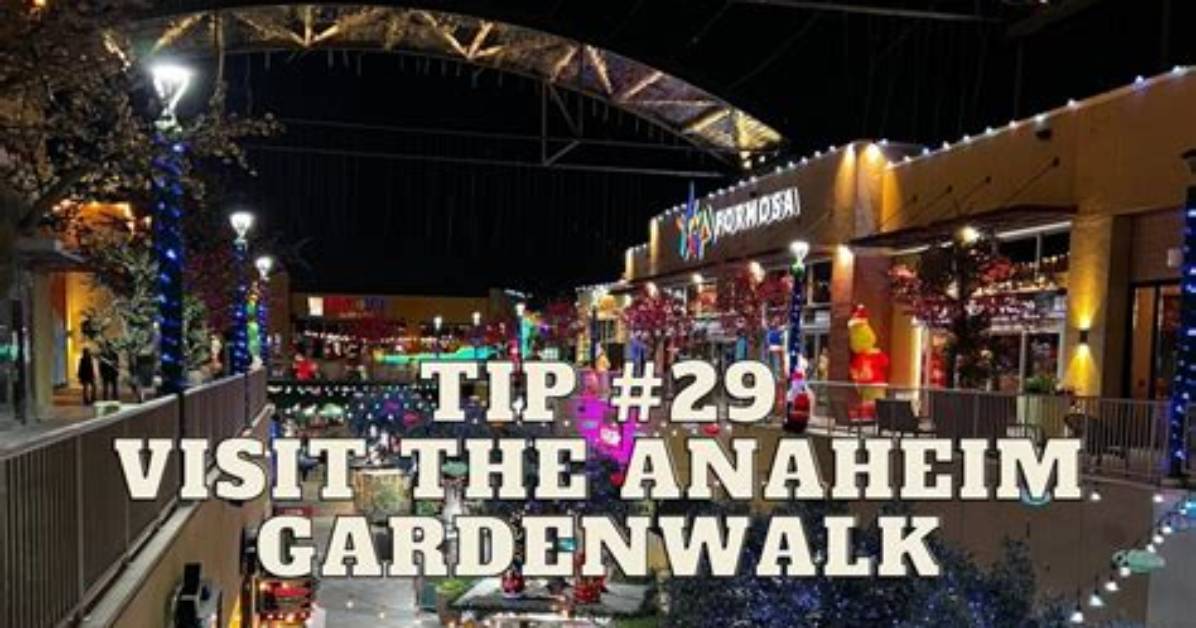
When GardenWalk opened its doors in 2008, developers envisioned an open-air promenade that would capture affluent foot traffic flowing out of the Disneyland Resort proximity. The timing proved disastrous. The Great Recession crushed consumer retail spending, forcing original ownership groups into bankruptcy within two years. Over the ensuing decade and a half, the center changed hands, underwent partial re-theming, and attempted to pivot toward experiential leisure.
Walking the corridors today reveals the mixed results of that transition. Ground-level outdoor dining and nightlife destinations draw steady business. Establishments like Cheesecake Factory, Bubba Gump Shrimp Co., and California Pizza Kitchen sustain consistent family dinner traffic, while bowling lounges, virtual reality arcades, and escape rooms fill intermediate retail units. Higher levels tell a different story. Cavernous suites intended for boutique fashion brands remain empty or rely on pop-up art displays to mask inactive storefronts.
The core structural problem is pedestrian orientation. Disney visitors leaving park gates on Harbor Boulevard naturally flow north and south along Harbor's main hotel strip. GardenWalk sits on Katella Avenue, requiring an intentional eastward turn away from the primary pedestrian arterial. Unless an event at the Anaheim Convention Center or a sold-out concert directs crowds toward Katella, casual foot traffic falls off steeply. This geometric reality has challenged three successive management teams.

