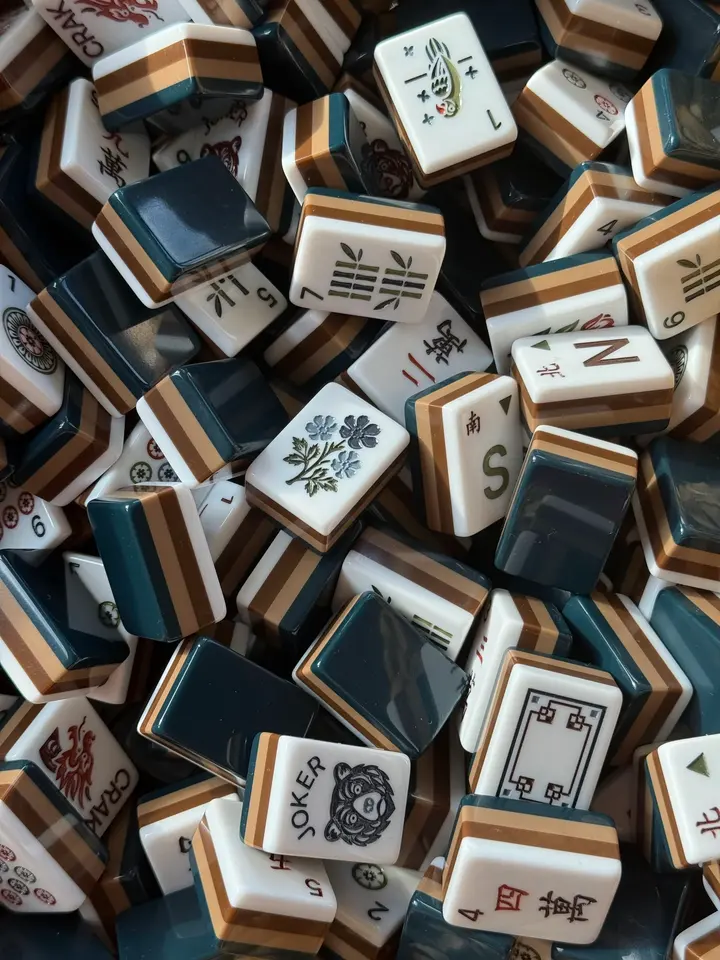
The steepest hurdle for Western buyers is the 166-tile requirement of American Mah Jongg. Standard Chinese sets run 144 tiles, while Japanese Riichi variants operate on 136. Suppliers accustomed to regional production frequently print standard blanks, haphazardly tack on eight Jokers, and mislabel the run as export-ready. American gameplay demands eight Jokers, four blank spares, eight flowers, and exacting dimensional thickness (often 30mm to 32mm) to ensure tiles stand upright on wooden or acrylic racks without tipping.
Navigating factory minimum order quantity (MOQ) boundaries requires understanding production setups. Changing ink pigments or engraving molds halts factory lines, costing facilities hundreds of dollars in downtime. The following breakdown maps common factory options, associated costs, and standard production thresholds across wholesale tiers:
| Production Tier | Material & Tile Count | Typical Unit Cost | Standard MOQ |
|---|---|---|---|
| Stock Wholesale Run | Melamine (144 tiles; Asian standard) | $7, $12 per set | 20, 50 sets |
| Modified American Semi-Custom | Melamine/Urea Blend (166 tiles) | $15, $24 per set | 100, 300 sets |
| Full OEM Custom Boutique | Pure PMMA Acrylic (166 custom engraved tiles) | $32, $55 per set | 500, 1,000 sets |
| High-End Hand-Carved Resin | Multi-layer Cast Resin (166 tiles + custom cases) | $65, $95 per set | 300, 500 sets |
Securing low MOQs under 100 sets for custom designs usually forces buyers into silkscreen surface printing rather than deep engraving. Silk-screened inks rub off after a few months of play. True OEM board game manufacturing requires physical mold creation or multi-axis CNC laser carving, investments that only become cost-effective at volumes above 500 sets.

