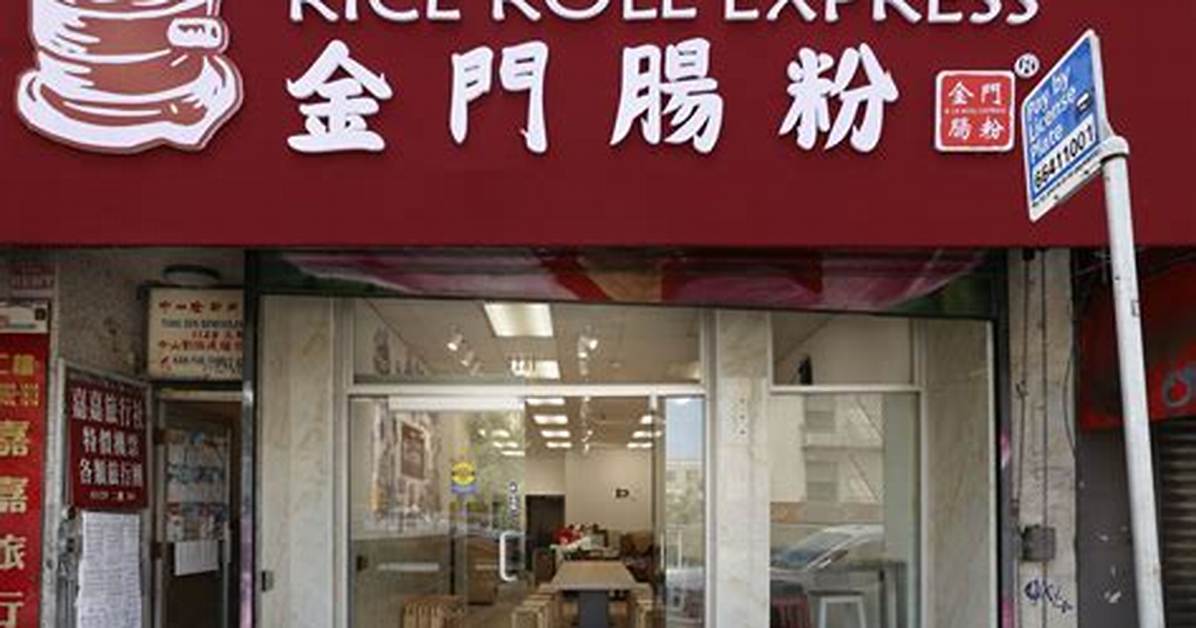
The counter keeps its menu deliberately focused. Instead of attempting a sweeping dim sum menu, Rice Roll Express concentrates on standard Cantonese breakfast foundations: steamed rice noodle rolls, warm soy milk, and congee. today a single order of har gow at an upscale downtown restaurant costs $14, these prices represent exceptional accessibility for San Francisco budget lunch hunters.
The classic dried shrimp and scallion roll costs just $5.75, delivering a savory, umami-rich chew balanced by the crunch of tiny cured seafood. The barbecue pork (char siu) version sits at $6.75, loaded with sweet, soy-lacquered ribbons of roast meat that season the surrounding starch layers. For beef lovers, the minced beef roll features subtle ginger notes and fresh cilantro for $7.25. Seafood purveyors typically gravitate toward the whole peeled shrimp option at $8.50, where plump, brined crustaceans provide a snappy contrast to the yielding rice wrap.
The technical standout, however, remains the zhaliang: a freshly fried dough cruller wrapped inside a steaming sheet of rice noodles. Executing zhaliang requires impeccable timing. Wrap the dough too early or let it sit in a plastic clamshell for ten minutes, and the steam will reduce the crisp pastry into a soggy sponge. Eaten on the sidewalk within three minutes of pickup, the contrast between the silken, tender outer skin and the deep-fried, shattering core is remarkable.

