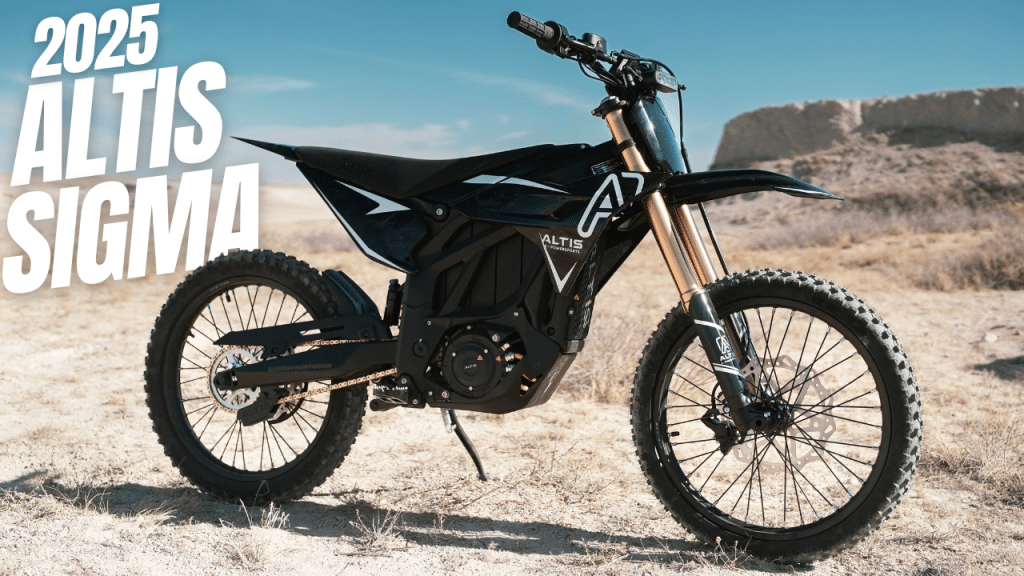
The core selling point of the Altis Sigma is its nominal 98-volt platform. Most electric dirt bikes in the light-to-midweight bracket operate between 60V and 72V. Surron, Talaria, and standard off-road options lean on lower-voltage systems that require massive phase current to generate meaningful wattage. Current generates thermal resistance. Heat kills electronic efficiency.
By engineering a pack with a nominal 98V rating, peaking over 110V fresh off the charger, Altis aimed to sidestep heavy copper losses. A 22kW draw at roughly 100V requires only 220 battery amps, whereas a 72V system must pull over 305 amps to hit that same peak output. On paper, running fewer amps allows thinner wiring harnesses, lower controller temperatures, and prolonged bursts of sustained thrust.
That electrical blueprint sounds devastatingly fast. Enthusiasts immediately ran theoretical calculations using nominal voltage, back-EMF constants, and motor RPM limits, assuming the platform would effortlessly cruise past freeway speeds. Yet electrical potential only sets the mechanical ceiling; aerodynamic drag, battery management systems, and rolling friction dictate where acceleration actually halts.

