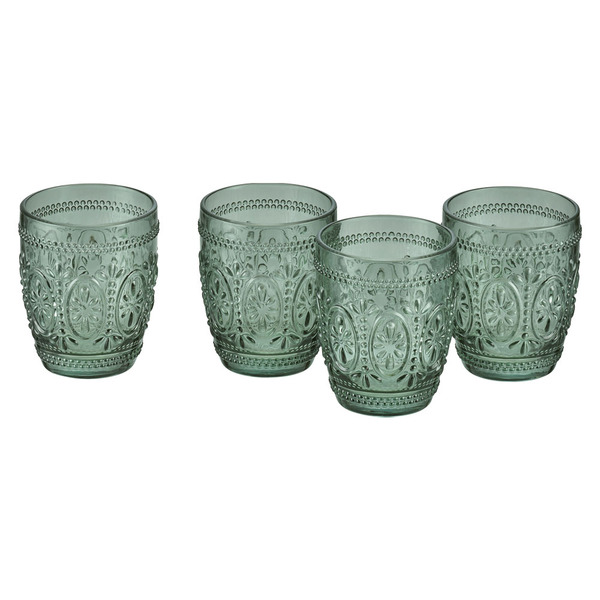
Product packaging for the Crofton drinkware line clearly lists the pieces as top-rack dishwasher safe. In standard household use, however, long-term dishwasher exposure reveals the difference between entry-level glassware and institutional-grade tableware.
Over extended testing cycles, heat and chemical interaction manifest in two distinct areas:
- Tint and Surface Retention: Clear fluted glasses emerge from standard wash cycles unscathed. Tinted and smoky amber sets, however, behave differently. If the color originates from a topical flash coating rather than raw colored glass batching, harsh powdered detergents and high-heat drying cycles will strip the finish, leading to patchy peeling around the lip.
- Etching and Cloudiness: Soda-lime variants exposed to soft water and aggressive alkaline detergents develop micro-abrasions over three to six months. This results in permanent milky cloudiness trapped within the recessed vertical flutes, which cannot be scrubbed away.
- Rim Degradation: Machine-pressed rims lack the fire-polished temper of commercial barware. Racking glasses where the rims vibrate directly against metal prongs or neighboring ceramic mugs regularly causes micro-nicks along the perimeter.
Hand washing with non-abrasive microfiber cloths preserves the high-gloss shine indefinitely. If using a machine, running an eco-cycle without heated drying extends the clarity and structural life of the glass.

