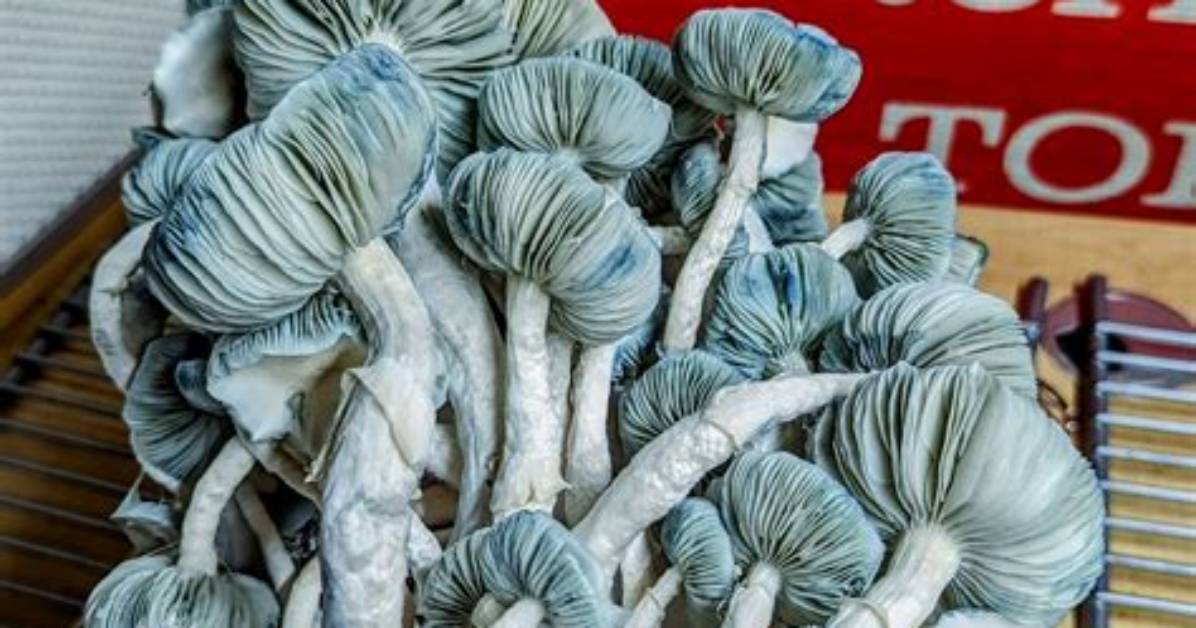
The physical structure of Jack Frost diverges sharply from typical golden-brown Psilocybe cubensis flushes. The mushroom produces pure white fruiting bodies throughout its initial growth phase. Unlike varieties whose caps remain domed or drop downward to shelter their gills, Jack Frost caps invert as they reach maturity, pulling upward into a saucer-like crown.
This inversion exposes the lamellae to open air, setting off a striking biochemical reaction. The gills develop a vivid cyan-to-sapphire tint, a phenomenon known in cultivation circles as blue gill discoloration. While casual consumers often assume this dramatic tinting indicates sky-high active compound concentrations, the mechanism is simpler: localized enzymatic oxidation. Free psilocin within the gill margins reacts with atmospheric oxygen, forming blue quinoid pigments.
Because the mushroom yields non-pigmented spores, growers do not face the messy black or purple spore drops common to standard cultivars. The fruits can remain on the cake for days after the veil tears without coating the underlying substrate in dark dust, allowing cultivators to let the caps fully flare for maximum aesthetic appeal.

