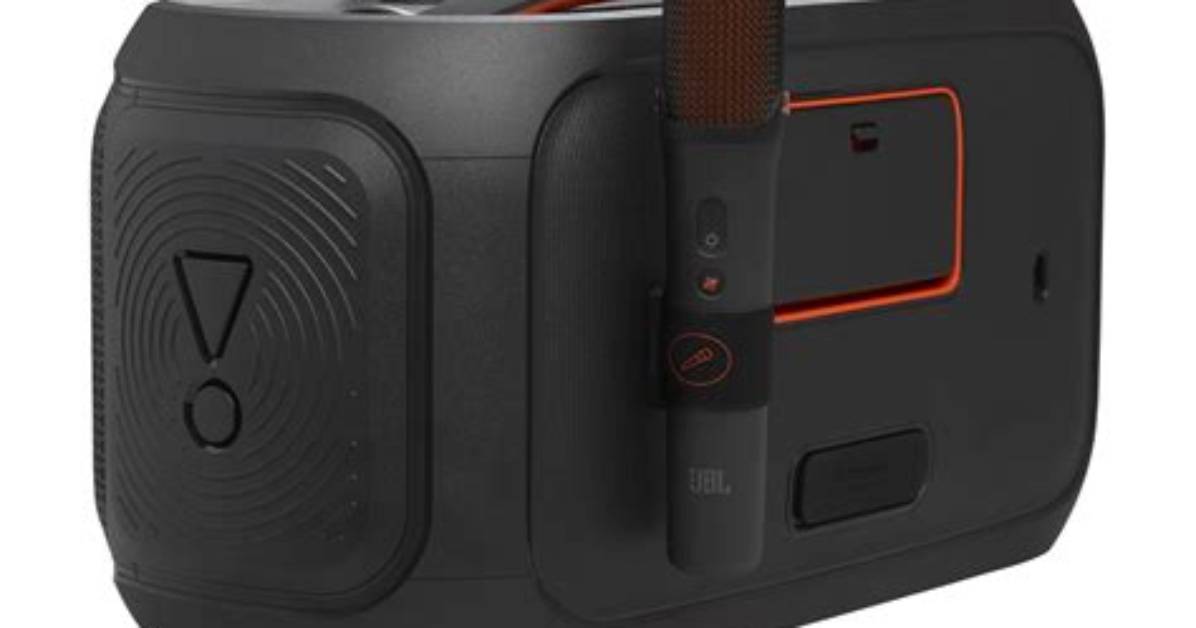
JBL built its reputation on punchy low-frequency presence, and this iteration features a dual-level Bass Boost sound quality profile. Level 1 elevates sub-bass fundamentals around 55 Hz to 80 Hz, rounding out hip-hop and modern pop without crowding the midrange vocal frequencies. Level 2 aggressively drives dynamic equalization, trading battery efficiency and upper-bass clarity for raw chest thump.
Real-world endurance diverges significantly from manufacturer lab ratings. JBL advertises a 6-hour playback ceiling, but dynamic audio content combined with wireless peripherals changes the math dramatically. During continuous field testing at 80% volume with Bass Boost active and two EasySing mics transmitting, the internal lithium-ion pack depleted in 3 hours and 48 minutes. Users planning extended off-grid gatherings will need access to AC wall power or a high-capacity portable power station.
| Hardware Feature | PartyBox On-The-Go (Gen 1) | PartyBox On-The-Go 2 Plus | PartyBox Club 120 |
|---|---|---|---|
| Amplifier Output | 100W RMS | 100W RMS (Refined DSP) | 160W RMS |
| Wireless Microphones | Standard UHF Wireless (1x) | EasySing 2.4 GHz Dual Mics | Sold Separately |
| Vocal Processing | Analog Echo Only | AI Tuning + Dynamic Anti-Feedback | App-Based EQ Controls |
| Tested Run Time (80% Vol) | 3.2 hours | 3.8 hours | 7.5 hours |
| Portability Style | Shoulder Strap | Ergonomic Padded Strap | Folding Top Carry Handle |

