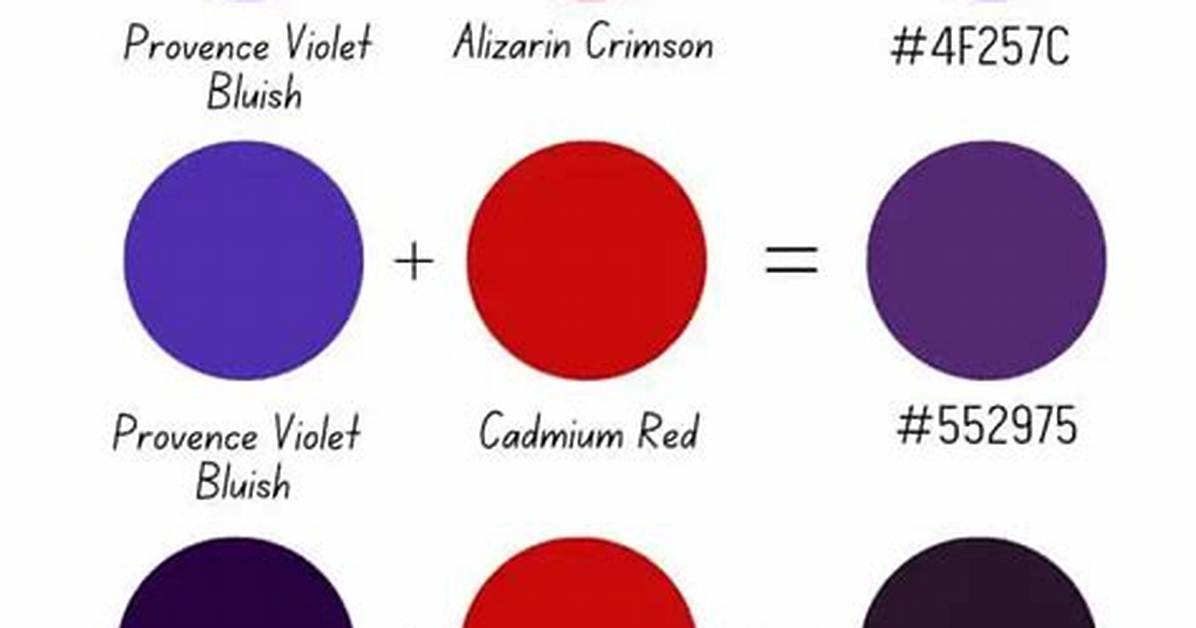
The most common frustration in paint mixing is unintended desaturation. An artist attempts to create an energetic wine hue, only to watch the mixture degrade into muddy sludge. This failure comes down to pigment temperature.
Every tube of commercial red paint leans either warm (containing yellow biases) or cool (containing blue biases):
- Warm Reds (Cadmium Red, Vermilion): These contain hidden yellow wavelengths. When mixed with purple, which contains blue, you introduce all three primary colors (red, blue, yellow) into one cup. That combination automatically triggers neutralization, generating dull brown or khaki.
- Cool Reds (Quinacridone Magenta, Alizarin Crimson): These are formulated without yellow bias, leaning toward blue. Blending cool reds with purple maintains absolute chromatic purity because no green-forming yellow pigments interfere with the light reflectance.
The same logic applies to your purple selection. Ultramarine Violet carries a soft, warm reddish-blue base that blends seamlessly with crimson, yielding clean gradients. In contrast, heavy industrial carbazole violets often contain gray stabilizing additives that deaden the final mix unless counterbalanced with high-transparency organic reds.

