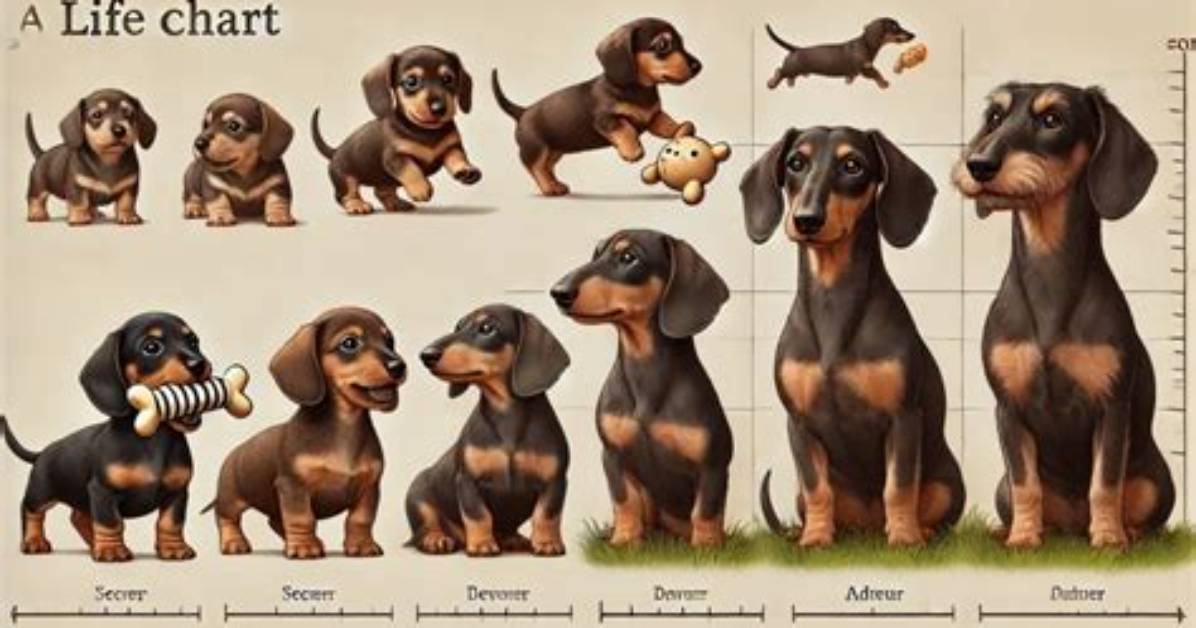
The miniature dachshund owes its longevity to the standard mammalian inverse scaling rule: smaller dogs age slower cellularly than large breeds. Free radical damage and telomere degradation proceed at a more measured pace in an eight-pound dog than in an eighty-pound mastiff. Yet their genetic architecture presents a paradoxical balance sheet.
Chondrodysplasia, the dwarfism gene responsible for their short legs and paddle paws, causes premature calcification of the intervertebral discs. In a typical dog, discs remain gel-like shock absorbers until double-digit age. In a miniature dachshund, disc dehydration and mineral hardening can begin before age two. While their heart, lungs, and kidneys are built for a fifteen-year run, their vertebral column ages ahead of schedule.
Veterinary data collected across specialty hospitals confirms that metabolic control directly correlates with life expectancy. A miniature dachshund carrying just two extra pounds places exponential mechanical strain on the T10 to L2 vertebrae. That extra load can convert a low-grade disc bulge into a paralyzing rupture requiring a $6,000 to $9,000 spinal surgery. Longevity in this breed is earned through spinal preservation and lean muscle retention.

