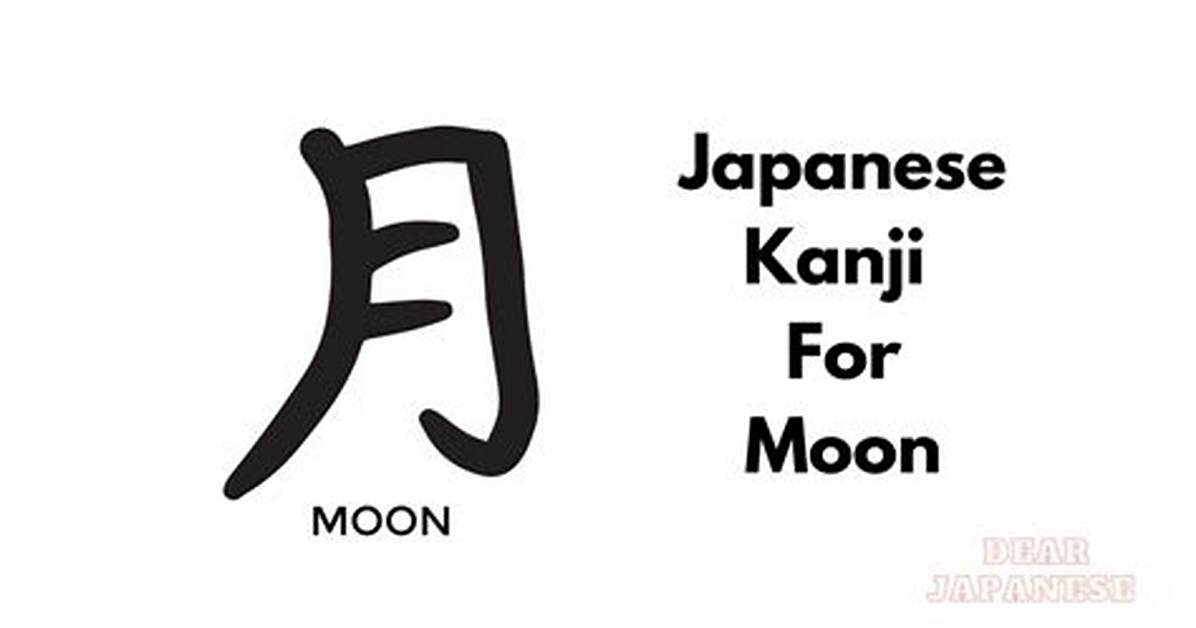
Navigating the character's phonetic shifts presents an early hurdle for Japanese language learners. The character operates across two primary categorization streams: native Japanese roots (kun'yomi) and Sino-Japanese readings (on'yomi).
The native reading is tsuki (つき). It functions as an independent noun. When a speaker points to the night sky, they say "Tsuki ga dete iru" (The moon is out). Compounds that treat the moon as an evocative physical entity, or poetic descriptor, frequently use tsuki, occasionally softening into zuki through sequential voicing (rendaku), as observed in tsukimi (moon viewing).
By contrast, Sino-Japanese loan readings split into two pronunciations: getsu (げつ) and gatsu (がつ). Selecting between them is not arbitrary; rigid linguistic categories determine the pronunciation:
Gatsu applies exclusively to named months of the Gregorian or traditional calendar. January is Ichigatsu (1月), July is Shichigatsu (7月), and December is Jūnigatsu (12月). Using getsu in these situations is a grammatical error.
Getsu governs time spans, days of the week, and abstract planetary concepts. Monday is getsuyoubi (月曜日), literally "moon-luminary day," echoing the Roman system that tied the second day of the week to the moon. When measuring length of time rather than a named month, speakers rely on getsu paired with a counting counter: one month of duration is ikkagetsu (1か月), and six months is rokkagetsu (6か月).
| Reading Type | Pronunciation | Primary Semantic Function | Contextual Examples |
|---|---|---|---|
| Kunyomi (Native) | tsuki (つき) | The physical orb, natural landscape, descriptive states | Tsukimi (月見), Tsukikage (月影), Tsuki (月) |
| On'yomi (Sino 1) | gatsu (がつ) | Calendar month names (1 through 12) | Shigatsu (4月), Hachigatsu (8月), Nengetsu (年月) |
| On'yomi (Sino 2) | getsu (げつ) | Days of the week, lunar duration, celestial science | Getsuyoubi (月曜日), Getsumatsu (月末), Ikkagetsu (1ヶ月) |

