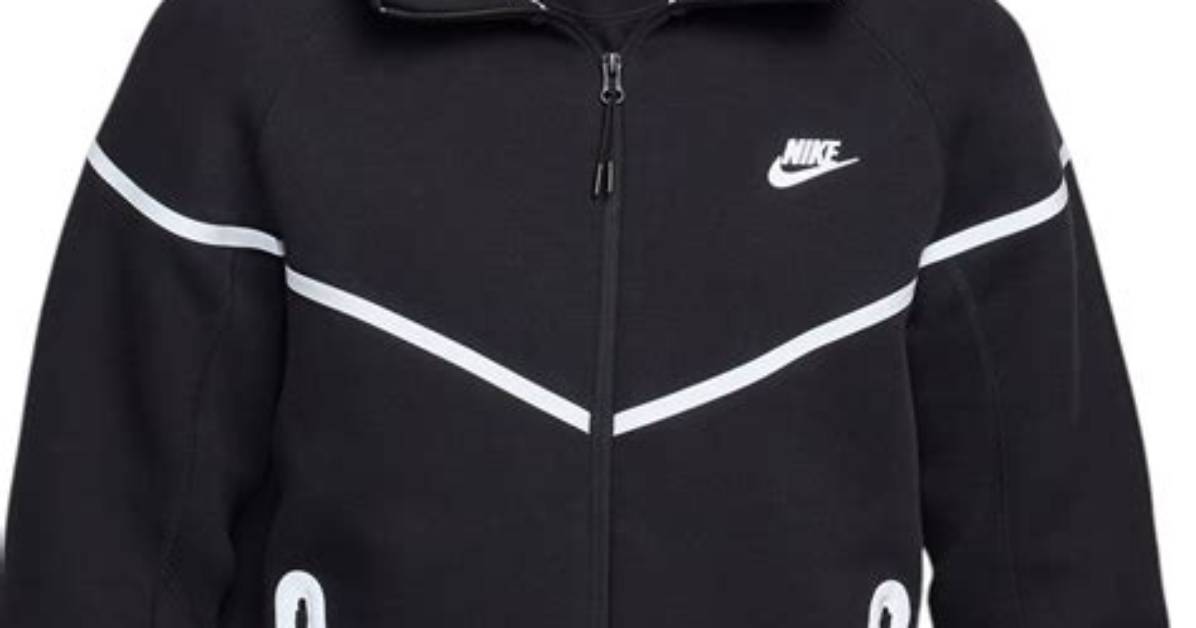
Standard fleece relies on brushed cotton loops to trap air against the skin, which adds bulk and pill quickly over time. Nike approached the problem through thermal engineering, developing a proprietary double-sided spacer fabric. This material layers smooth jersey cotton around an ultra-thin synthetic foam core. The resulting sandwich creates microscopic thermal air pockets, maximizing thermal warmth retention while slicing weight in half.
Reflective editions layer another technical dimension over this base: heat-transferred retroreflective paneling. Often developed using microscopic glass spheres embedded in polymer resins, identical to Scotchlite technologies, these panels bounce light directly back toward its source. When hit by car headlights or smartphone flashes, the matte charcoal taping illuminates in sharp silver-white relief.
This reflective taping durability comes with a physical trade-off. The spacer textile flexes naturally with body movements, but the retroreflective laminate possesses almost zero elasticity. Repeated strain or aggressive friction weakens the bonded borders over time. Knowing how these composite materials interact determines how long the garment stays intact.

