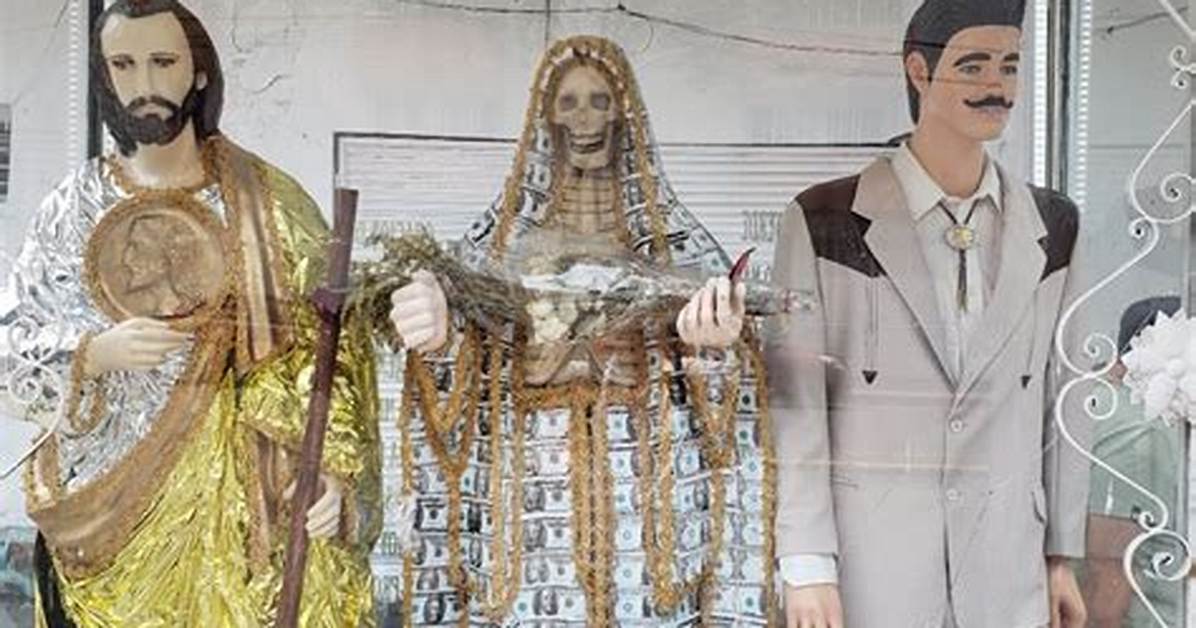
Devotional tattoos of Saint Jude owe their distinct aesthetic to mid-twentieth-century Chicano culture. The movement emerged from the streets of East Los Angeles, El Paso, and the California correctional system during the 1970s and 1980s. Artists working with improvised, single-needle tattoo rigs turned restricted materials into an influential art form: fine-line black and grey realism.
Pioneered by legendary artists like Freddy Negrete and Jack Rudy, the Chicano style abandoned heavy, solid outlines and bright primary colors in favor of soft, atmospheric graphite shading. This technique suited sacred portraiture. It captured delicate cloth folds, detailed facial expressions, and radiant halos using diluted black ink washes.
[Traditional Iconography]
• Flame of the Holy Spirit
• Medallion of the Holy Face
• Martyr's Club / Halberd
│
▼
[Chicano Tattoo Application]
• Single-needle precision
• Smooth black & grey shading
• Baroque framing & clouds
│
▼
[Lifelong Sacred Mandas]
• Visible spiritual contract
• Protection from street perils
• Public declaration of faith
A full Saint Jude sleeve or backpiece represents a major investment in pain, time, and money. High-end artists in modern hubs like Los Angeles, Austin, and Mexico City book custom portrait projects months in advance, with sessions running $150 to $300 an hour. The result is a personal altar carried directly on the skin. Devotees often frame the saint's portrait with baroque scrollwork, rosaries wrapped around wrists, and script quoting specific Bible verses or personal vows.

