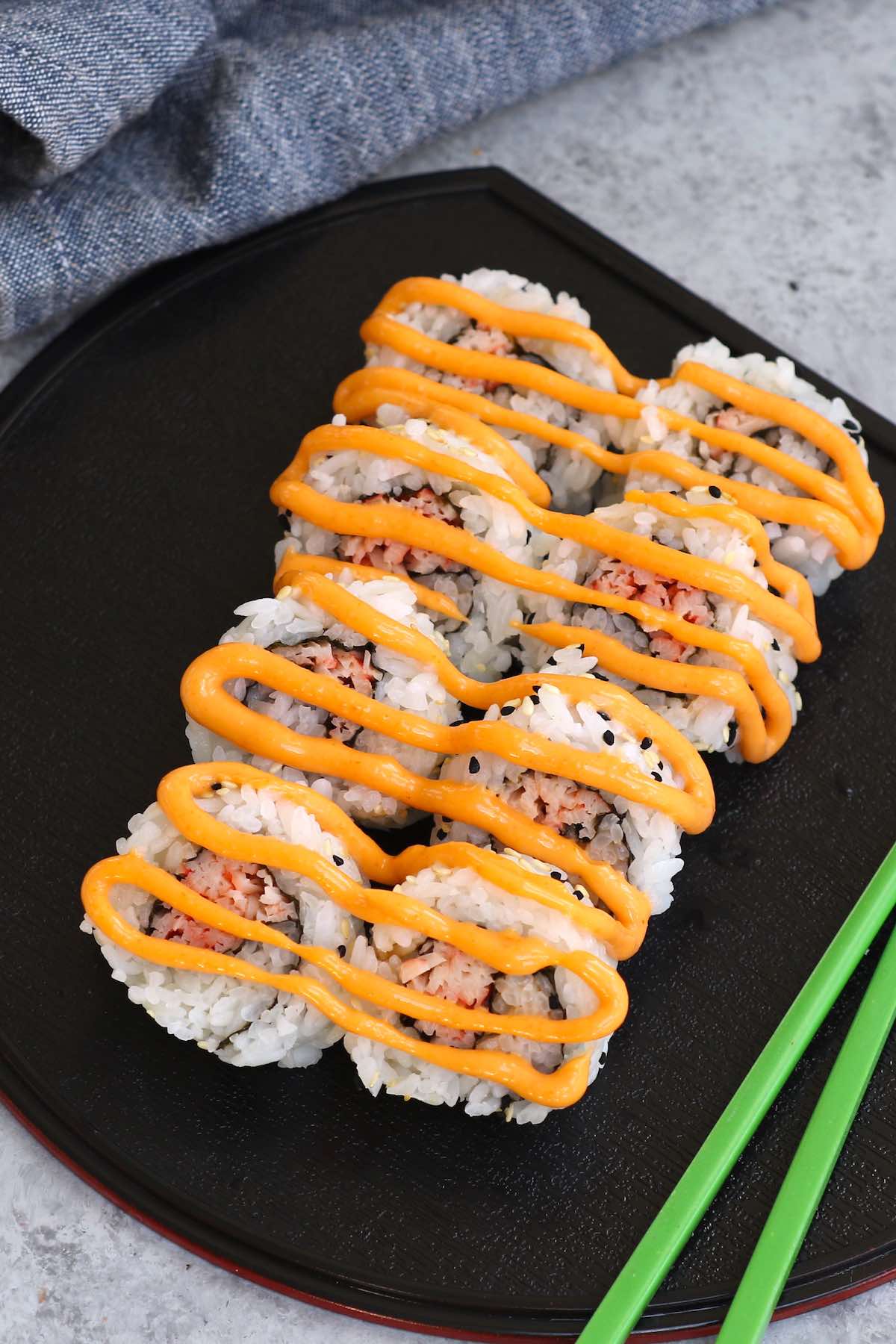
Genuine crab meat is sweet, fibrous, and expensive. Fresh blue crab or Dungeness crab wholesales at steep premiums, forcing fast-casual establishments and supermarket chains to look elsewhere. Their solution is surimi, a processed fish paste invented centuries ago in Japan and perfected for industrial mass production in the 1970s. When you eat a standard spicy crab roll, you are consuming wild Alaska pollock or Pacific whiting that has been washed repeatedly, pulverized into an odorless gel, and blended with binders.
Food processors blend that minced fish base with wheat starch, sorbitol, vegetable oils, salt, and pulverized crab shell extract for aroma. Potassium chloride and carmine dyes provide the bright crimson stripe along the outer casing. Surimi provides lean marine protein, but the processing alters its nutritional integrity. The natural mineral density of genuine crustacean meat disappears during the intense washing cycles, replaced by added sodium and binding carbohydrates that inflate shelf life.

