Before Diego Rivera became the towering leader of the Mexican muralism movement, he spent more than a decade immersed in European modernism. Arriving in Europe in 1907, Rivera moved through the studios of Madrid and Paris, positioning himself squarely in the Montparnasse avant-garde. During his Cubist period in Paris between 1913 and 1917, he worked alongside Pablo Picasso, Juan Gris, and Georges Braque, deconstructing perspective and experimenting with faceted planes in works like Zapatista Landscape (1915).
Easel painting inside Parisian lofts left Rivera philosophically frustrated. He viewed canvas art as portable commodity capital, easily hoarded by private collectors and walled off from ordinary citizens. A study tour of Italy in 1920, where he examined early Renaissance wall paintings by Giotto and Piero della Francesca, clarified his ambitions.
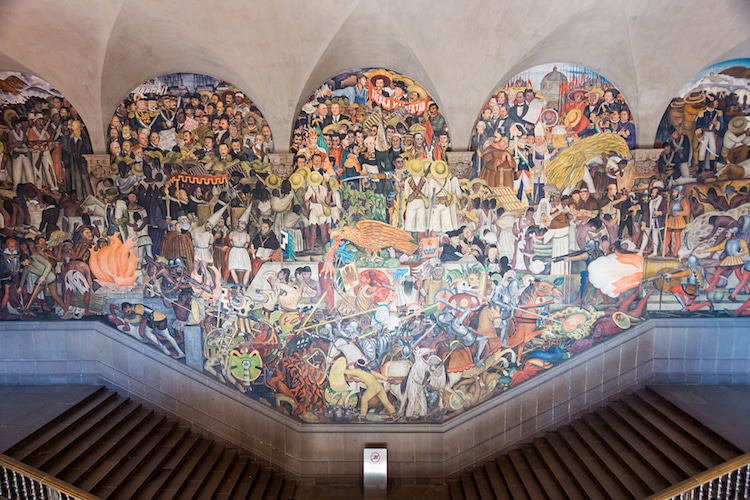
When Education Minister José Vasconcelos summoned Rivera back home to help reshape post-revolutionary Mexico, Rivera dropped European abstraction. He redirected his technical command toward public walls. He believed that the newly emerging Mexican republic needed an accessible visual vocabulary. By melding European classical design with the vibrant aesthetics of indigenous artisans, Rivera laid the foundations of Modern Mexican art.

