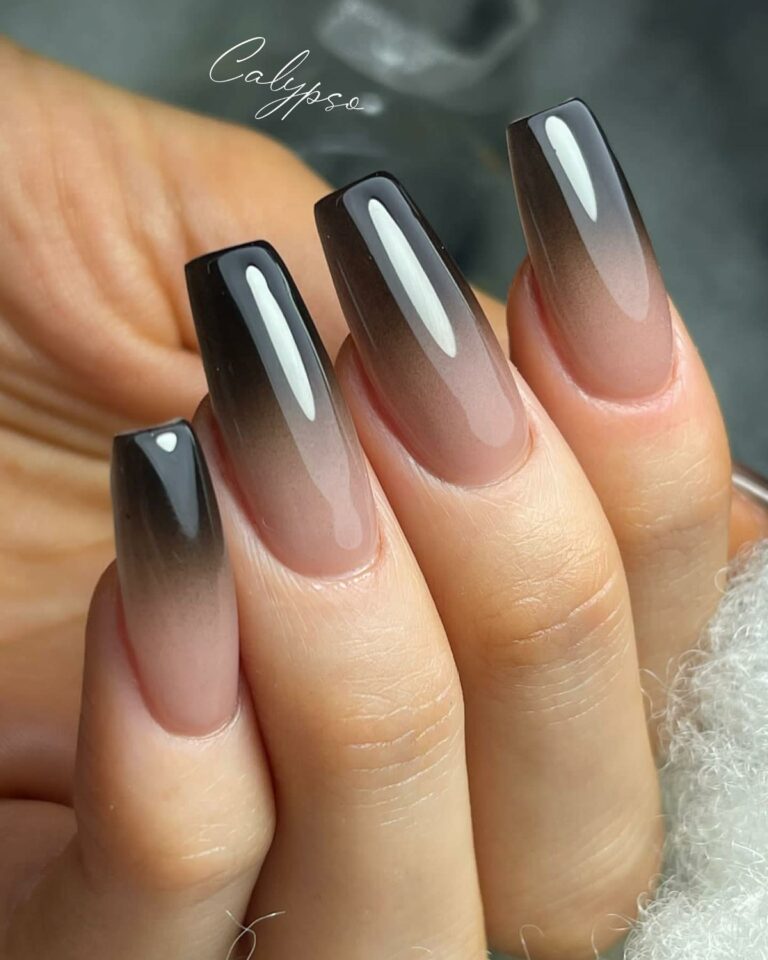
A black ombré design takes on dramatically different attitudes depending on its finishing coat. The surface reflection dictates how light interacts with the transition point where dark pigment dissolves into nude nail beds.
A high-gloss top coat acts as a magnifying lens. Clear, dense polymers trap ambient light, giving the black tips a wet, obsidian look reminiscent of blown glass or patent leather. The reflective sheen deepens the optical contrast between the rich pigment and the natural flesh tones underneath. This high-shine finish remains the standard recommendation for clients who want their nails to match gold or silver jewelry.
Conversely, a matte black finish transforms the gradient into a suede or frosted-glass effect. Matte sealants contain microscopic silica particles that scatter light rather than bouncing it back. This softens the transition, giving the black fade a hazy, charcoal appearance. Clients frequently request matte treatments on almond silhouettes to dial back the shine in favor of a soft, understated mood.

