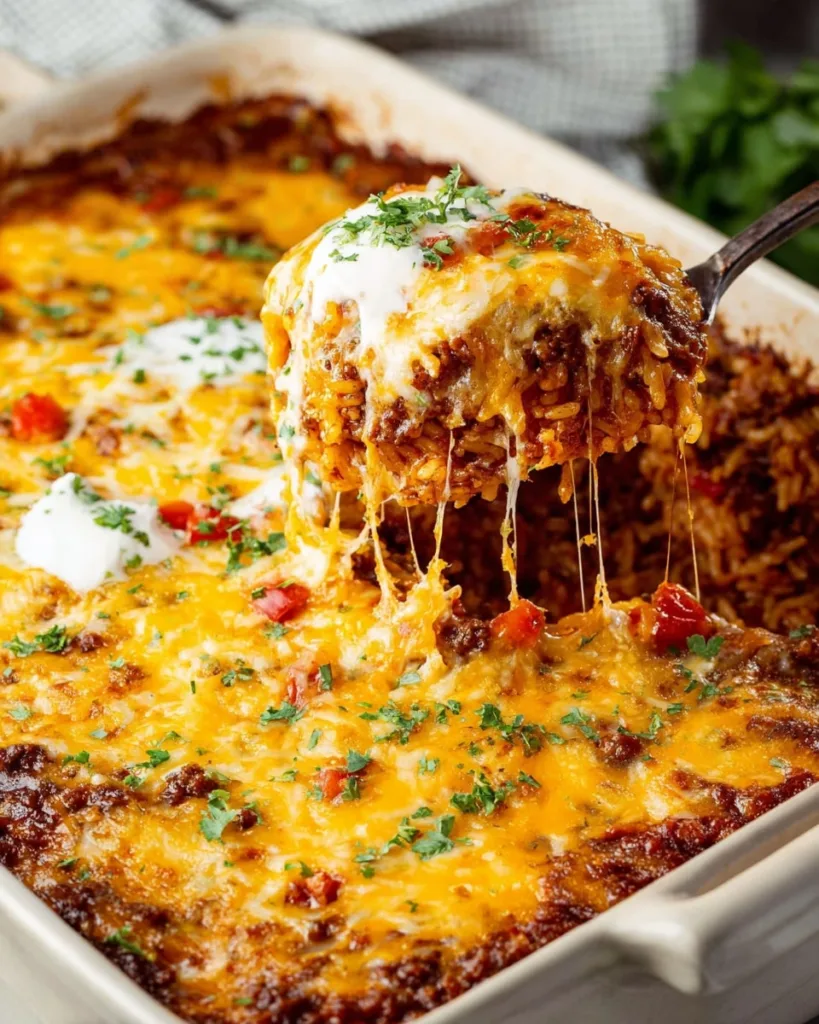
Adapting taco rice into a true comfort food bake required redesigning the dish's moisture balance. In a traditional bowl, rice acts as a passive base catching spiced beef fat. In an oven-baked casserole, dry grains turn hard while soggy grains turn to mush. Successful recipes rely on a par-cooked or baked Mexican rice foundation, enriched with tomato paste, chicken stock, and garlic before it ever hits the casserole dish.
The middle structure swaps delicate fresh produce for heat-stable fibers. Home cooks apply a concentrated black beans and salsa layer over the rice base, which seals moisture inside the lower grains while preventing beef grease from pooling at the bottom. The seasoned ground beef, cooked down with cumin, smoked paprika, chili powder, and onion, forms the core protein stratum.
Instead of mild, room-temperature shreds, the baking process demands a generous blanket of shredded cheddar jack cheese. When baked at 375°F (190°C) for 20 to 25 minutes, the Monterrey Jack provides stretch and creaminess while the sharp cheddar yields a savory, browned surface. The result resolves the primary flaw of traditional American ground beef casseroles: bland, dry rice buried beneath oily meat.

