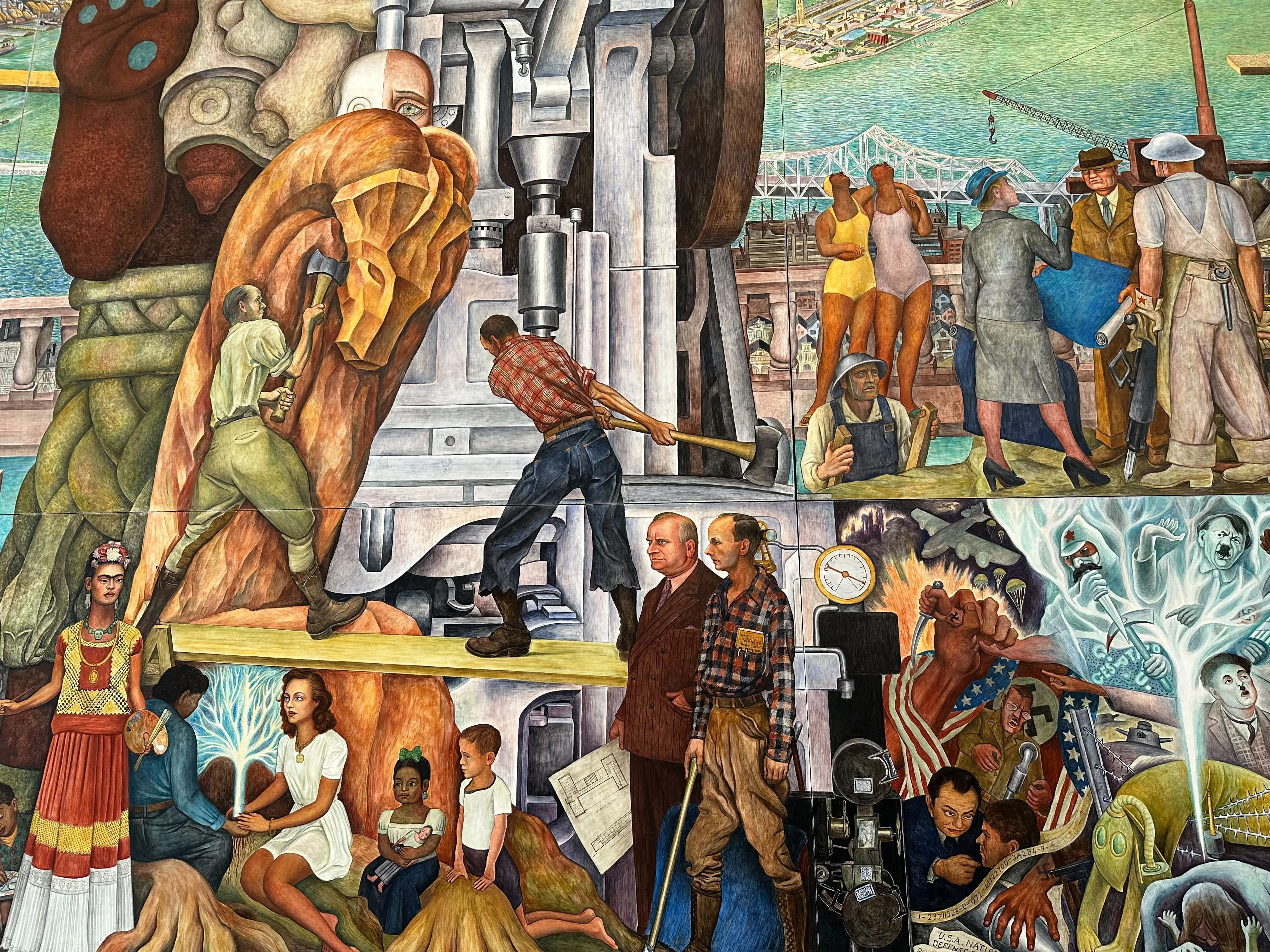
The synthesis that characterized Rivera's career was neither immediate nor accidental. It was a deliberate fusion of competing movements, materials, and worldviews spanning three decades of experimentation.
| Period & Locale | Dominant Influence | Technical & Formal Trait | Signature Work |
|---|---|---|---|
| 1911, 1919Paris, France | Cubism and Parisian avant-garde | Faceted planes, collage logic, shifting optical perspectives on easel canvas. | Zapatista Landscape (1915) |
| 1920, 1921Padua, Florence, Arezzo | Italian Renaissance frescoes (Giotto, Masaccio) | Buon fresco methodology, giornata pacing, sculptural human weight, architectural integration. | Italian sketchbooks & field studies (over 300 drawings) |
| 1921, 1928Mexico City & Chapingo | Pre-Columbian forms & Mexican Revolution imagery | Indigenous color palettes, agrarian worker iconography, monumental communal framing. | Secretaría de Educación Pública (SEP) cycles |
| 1930, 1934Detroit & New York | Marxist political ideology & American industrialism | Machine-age dynamic curves, class conflict narratives, high-density crowds. | Detroit Industry & Man at the Crossroads |

