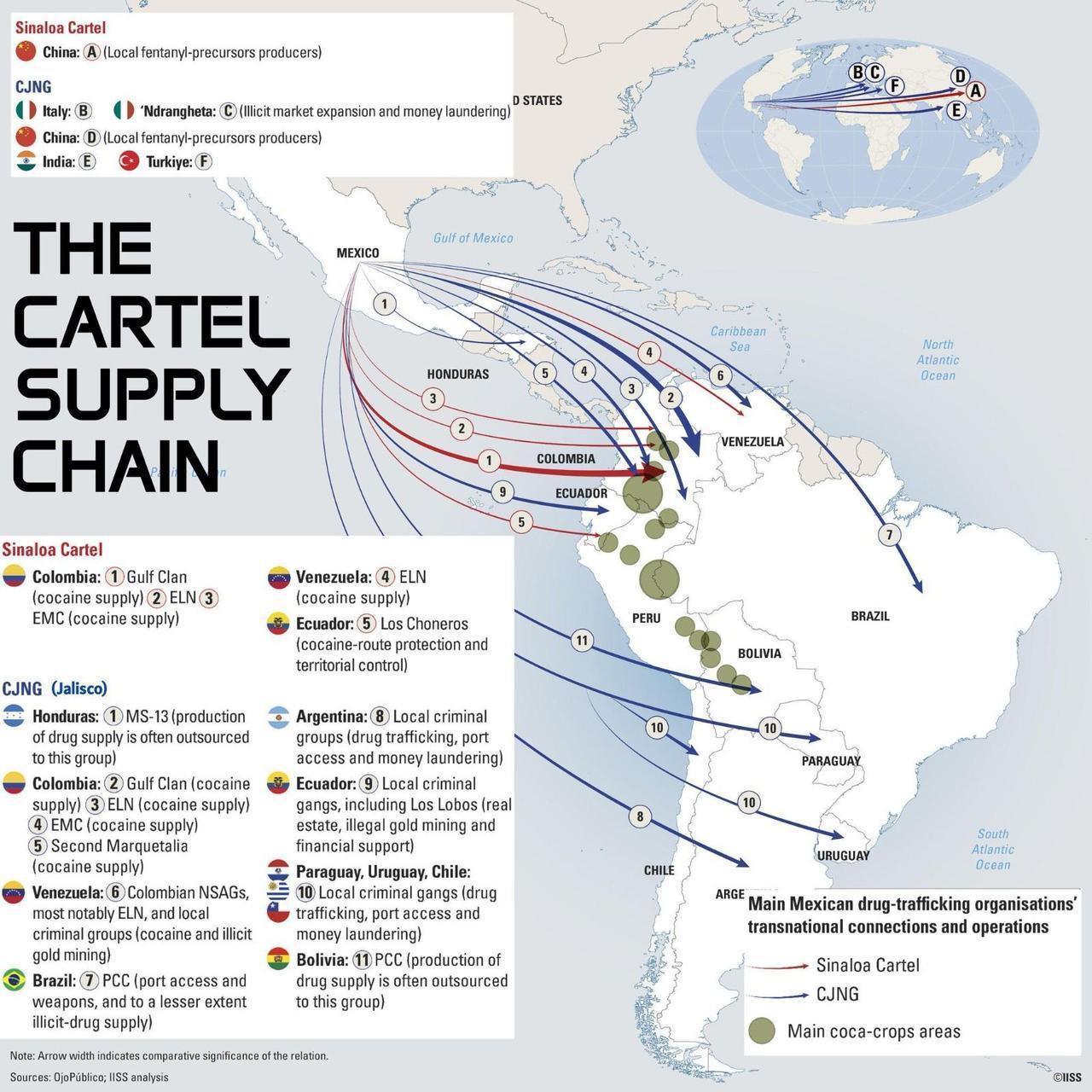
Transnational criminal organizations function much like shadow multinationals, optimizing trade bottlenecks across continents. Understanding their scale requires examining the primary actors dominating global trade routes in 2026.
| Syndicate / Cartel | Primary Geographic Base | Primary Global Corridors | Estimated Global Footprint |
|---|---|---|---|
| Sinaloa Cartel | Pacific Coast, Mexico | East Asia precursor transit to US Southwest; Europe; Oceania | Active operations across 50+ countries |
| Jalisco New Generation (CJNG) | Central/Western Mexico | Manzanillo maritime trade to North America and South America | Dominates 28 Mexican states; multi-continent distribution |
| 'Ndrangheta | Calabria, Italy | South American ports to Antwerp, Rotterdam, and Gioia Tauro | Controls an estimated 70, 80% of European cocaine import flows |
| Primeiro Comando da Capital (PCC) | São Paulo, Brazil | Bolivia/Paraguay border to Santos port, targeting West Africa & Europe | 40,000+ sworn members across South America and maritime logistics |
| Clan del Golfo | Urabá Region, Colombia | Caribbean & Pacific littoral routes to Central America & Mexico | Controls key production basins and migrant smuggling pipelines |
| Balkan Cartel Network | Western Balkans | Direct pipeline from Ecuador/Brazil to Northern Europe & UAE | Dominates high-seas maritime logistics and European wholesale |

