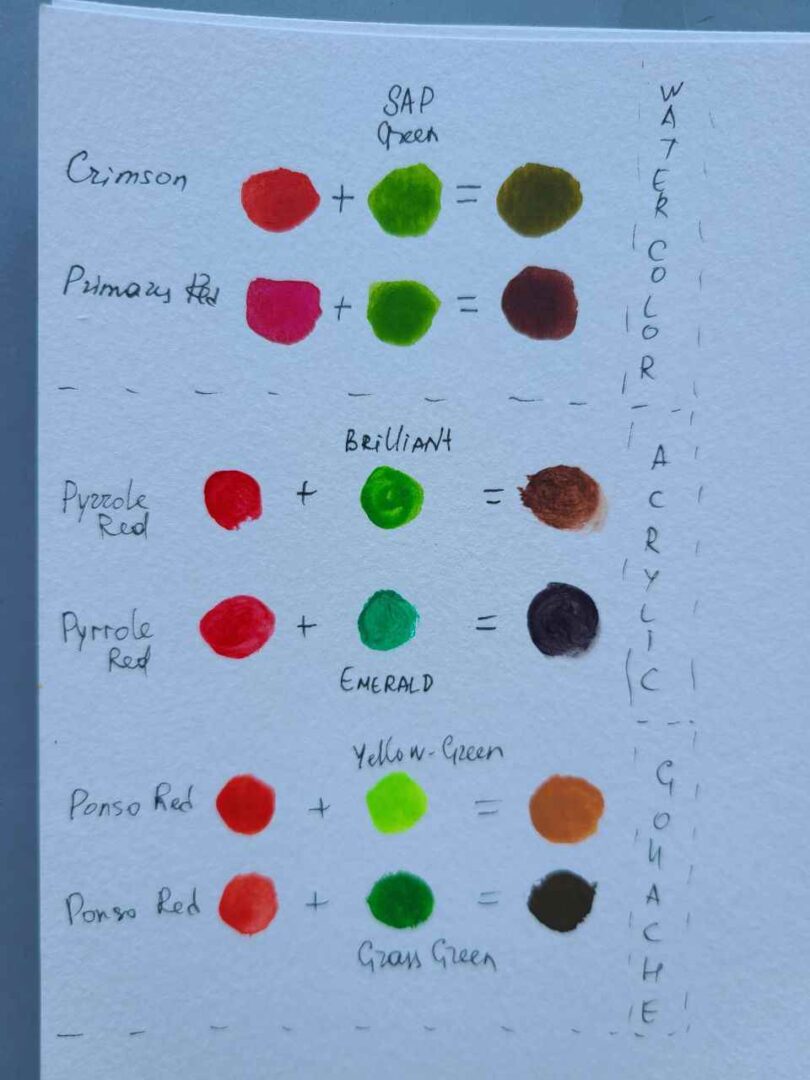
A frequent point of frustration for painters is buying two tubes marked "Red" and "Green," mixing them evenly, and ending up with an unattractive, muddy sludge instead of a rich, velvety brown. This happens because paint names on labels often mask the complex chemical behavior of individual pigments.
Modern manufacturers mark professional artist paints with Color Index International codes on the back of each tube. A red labeled "Cadmium Red Medium" contains PR108 (Pigment Red 108), an inorganic compound made from cadmium sulfoselenide. It is completely opaque, highly refractive, and leans gently warm.
In contrast, a red like "Quinacridone Red" carries PR209, an organic synthetic pigment that is transparent, cool, and carries strong violet undertones.
If you blend Cadmium Red (PR108) with Phthalo Green Blue-Shade (PG7), the extreme opacity of the cadmium fights the sheer, aggressive tinting power of the phthalo. The result is a muddy, opaque gray-brown that can easily overpower a delicate glaze.
Pairing transparent Quinacridone Magenta (PR122) with Viridian (PG18) produces a translucent, luminous violet-tinted bronze. Light penetrates through these paint layers, bounces off the white gesso ground below, and travels back through the pigment glaze. The surface looks deep, rich, and full of life.
Always check your paint tubes for their single-pigment listings. When you mix paints made from two or three blended pigments, combining those with a multi-pigment green means your mix now holds five or six separate chemical compounds. That complexity is precisely what turns an intended earth tone into lifeless visual mud.

