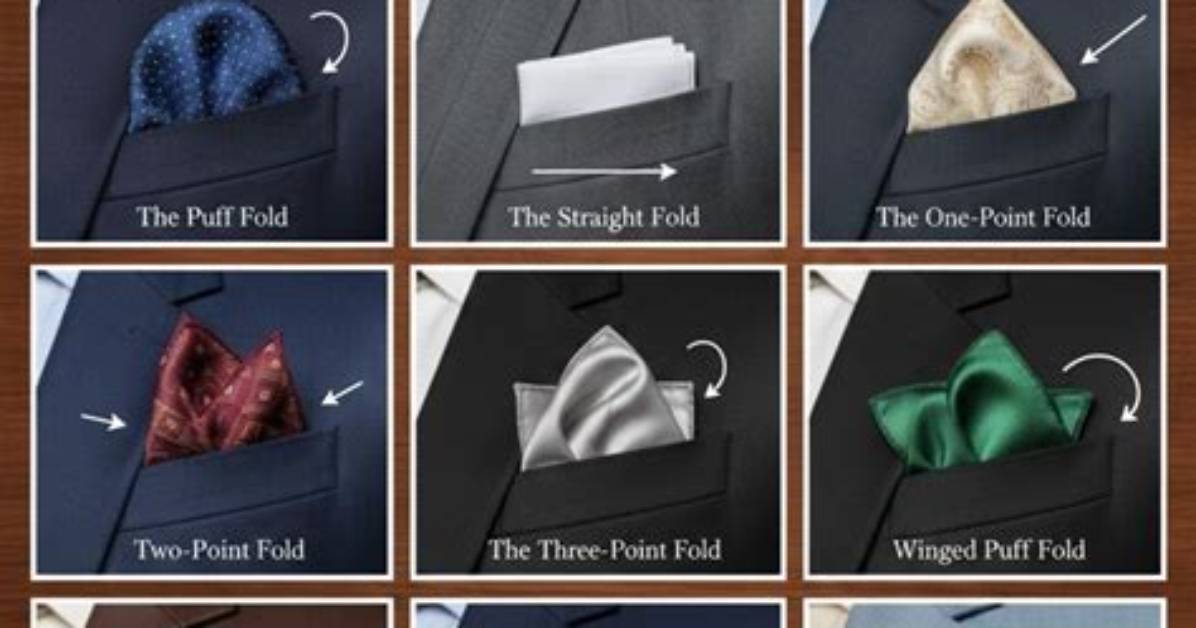
Before attempting a fold, examine the textile in your hands. Fabric weight, weave, and edge construction dictate how a square behaves inside your jacket pocket. The greatest mistake novice dressers make is trying to force a lightweight printed silk into a rigid geometric crease, or stuffing a thick Irish linen into an airy puff.
Linen provides friction and structural rigidity. A high-grade linen breast pocket handkerchief holds a sharp crease without collapsing down into the pocket lining throughout an eight-hour day. This makes linen the undisputed standard for crisp, horizontal, and multi-point folds. Look for hand-rolled edges sewn with meticulous hand-stitching; these slight irregularities give the exposed edge subtle, bespoke dimension that machine-stitched hems completely lack.
Silk, by contrast, behaves like liquid. It slides against smooth chest canvassing and resists sharp creases. Fine silk demands relaxed folds that celebrate volume, luster, and draped folds rather than razor edges. Wool, cashmere, and heavy cotton twill sit between these two extremes, ideal for textured tweed blazers and flannel sport coats where matte texture must ground seasonal layering. A square sized between 12×12 inches (30×30 cm) and 17×17 inches (42×42 cm) ensures sufficient volume so the fabric neither slips into the pocket abyss nor bulges like an overstuffed envelope.

