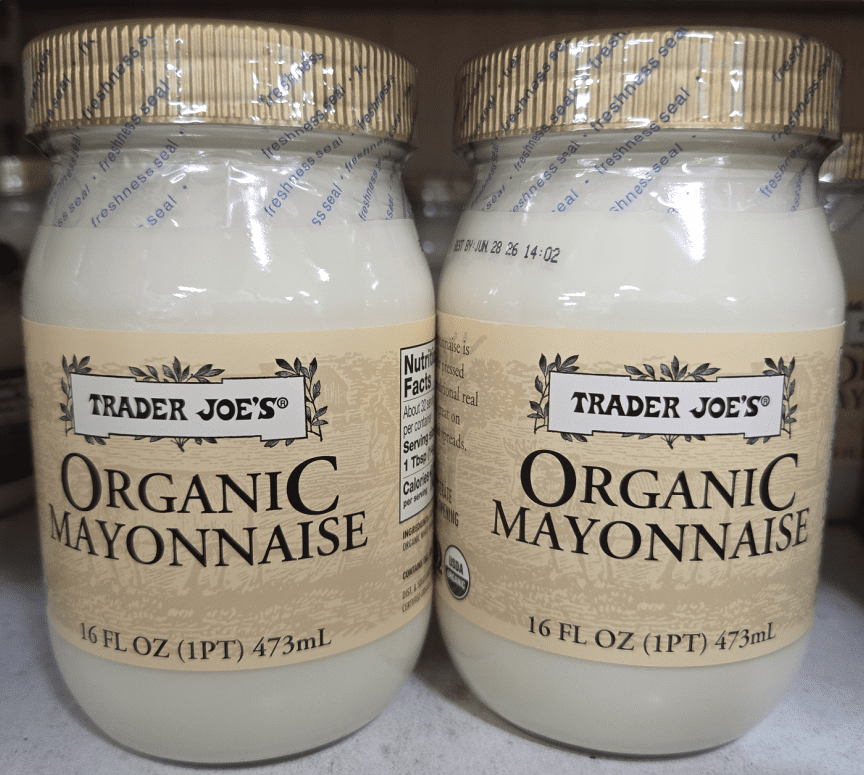
Mayonnaise is a mechanical marvel: an unstable mixture of microscopic oil droplets suspended in water, held together by the lecithin inside egg yolks. The firmness of a commercial jar depends on droplet size, total oil volume, and mechanical shear during blending. When oil content slips below 65%, federal identity standards legally bar products from using the word "mayonnaise," pushing them into the "salad dressing" category.
Trader Joe's clears the legal benchmark, registering roughly 10 grams of fat per 13-gram serving (approximately 77% fat content). Hellmann's sits marginally higher at 11 grams of fat per serving, while Duke's operates at roughly the same weight but omits added sugar entirely. That single gram of fat creates a tangible variance on the palate. Hellmann’s feels gel-like and scoopable, maintaining sharp peaks when lifted with a spatula. Trader Joe's behaves like a looser, silkier cream.
Oil and emulsion stability directly dictate how the condiment behaves when subjected to heat or acid. During testing, resting a spoonful of Trader Joe’s on a warm, freshly seared burger bun caused the fat matrix to melt faster than Duke’s. The lower shear density allows oil to separate marginally earlier under heat. For cold applications, however, this softer spreadability eliminates the risk of tearing soft sandwich bread.

