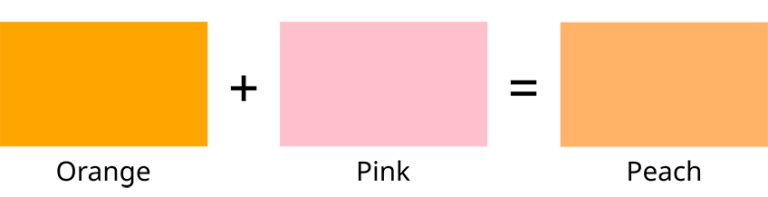
Mixing color with your hands behaves differently than mixing pixels on a 4K display. In physical art mediums like oil, watercolor, and gouache, colors blend subtractively. The pigments absorb specific light waves and reflect whatever remains. Because paints contain chemical binders and minor compound impurities, physical blends are darker and slightly less saturated than the pure starting ingredients.
Working inside digital engines like Figma or Adobe Photoshop switches the environment to additive mixing. Digital screens build color out of red, green, and blue (RGB) light diodes. Pink is represented as maximum red light paired with partial blue and green light (such as RGB 255, 192, 203). Orange consists of maximum red alongside mid-level green (such as RGB 255, 165, 0).
When digital engines blend these layers, the math merges their channel brightness values. The red channel stays fully saturated at 255, while green and blue light balance each other out. This avoids the dullness occasionally observed on a canvas, allowing digital coral shades to radiate on high-refresh-rate OLED panels. Web developers seeking seamless color wheel harmonies must verify their blends across varied display profiles to ensure that what looks like creamy peach on a calibrated monitor does not wash out into plain tan on consumer handsets.

