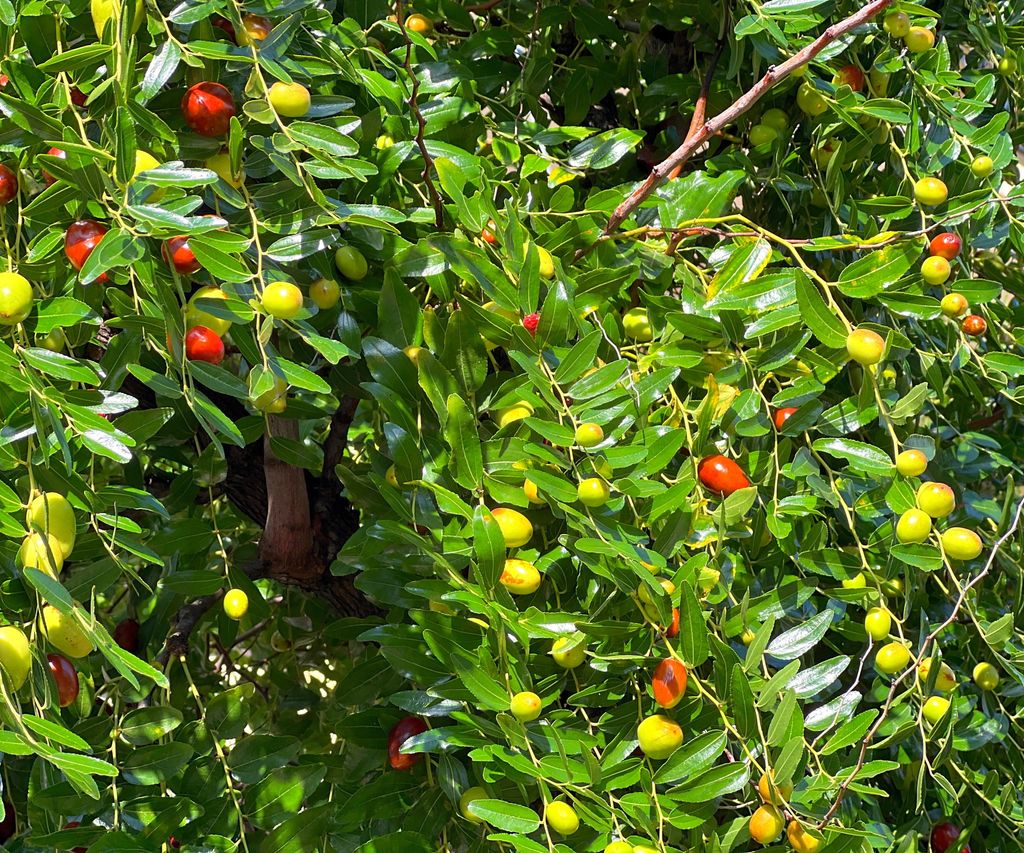
In late spring, well after peaches and apples have leafed out, the juju bean tree wakes up. It produces alternate, glossy ovate leaves measuring 1 to 2 inches long with finely serrated margins. The upper leaf surface carries a polished, waxy sheen that reflects harsh midday sun, an evolutionary adaptation that cuts water loss through transpiration.
The definitive field mark rests in the venation. Unlike most temperate fruit foliage that shows a single central midrib with branching lateral veins, Ziziphus jujuba features three distinct primary veins originating together at the base of the blade and stretching nearly to the tip.
The leaves emerge alongside tiny, inconspicuous flowers in early summer. These five-petaled, star-shaped blooms span less than a quarter-inch across and emit a faint, sweet, green-tea fragrance that attracts honeybees by the hundreds.

