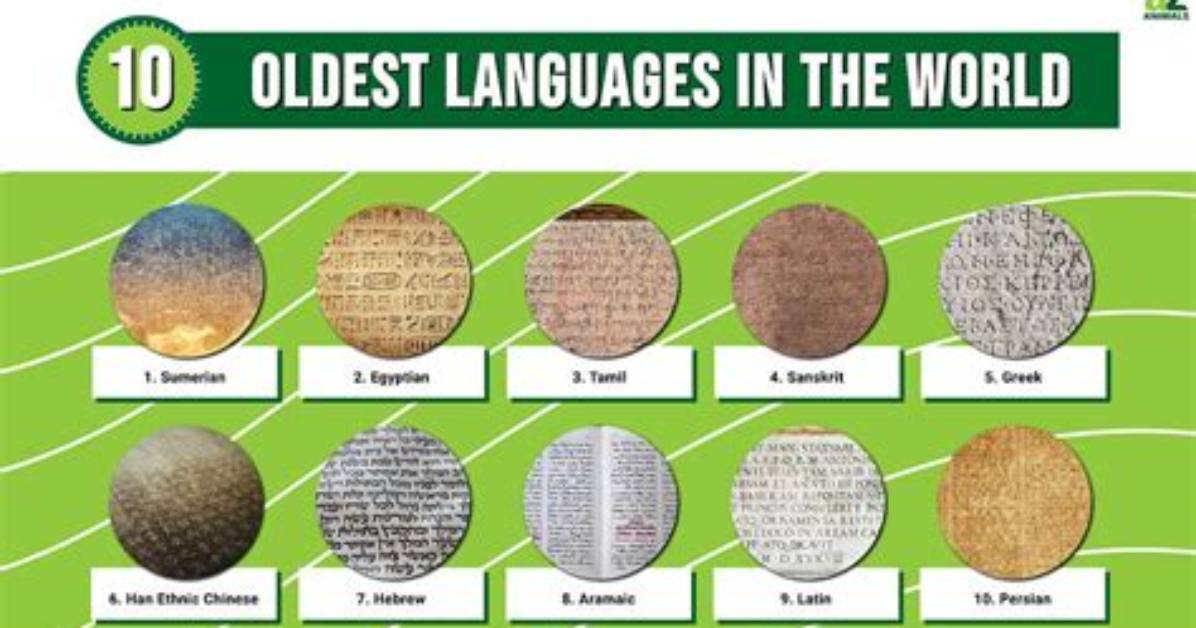
To understand how writing systems and spoken lineages diverge, linguists evaluate languages by their earliest confirmed archaeological proof, their genealogical families, and their current vitality across the globe.
| Language | Language Family | Earliest Attested Date | Current Vitality Status |
|---|---|---|---|
| Sumerian | Language Isolate | c. 3300, 3100 BCE | Extinct; liturgical until 1st century CE |
| Ancient Egyptian | Afroasiatic | c. 3250, 3000 BCE | Survives liturgically as Coptic |
| Akkadian | Afroasiatic (Semitic) | c. 2500 BCE | Extinct; replaced by Aramaic |
| Sanskrit | Indo-European (Indo-Aryan) | c. 1500, 1200 BCE (oral Rigveda) | Liturgical; spoken second language |
| Greek (Mycenaean) | Indo-European (Hellenic) | c. 1450 BCE (Linear B) | Evolved into Modern Greek (13M+ speakers) |
| Chinese (Old Chinese) | Sino-Tibetan | c. 1250 BCE (Oracle Bones) | Evolved into Sinitic family (Mandarin, Yue, etc.) |
| Tamil | Dravidian | c. 500, 300 BCE (Inscriptions) | Vibrant living language (80M+ native speakers) |
| Basque | Language Isolate | c. 1st century CE (Aquitanian names) | Vibrant regional language (750k+ speakers) |

