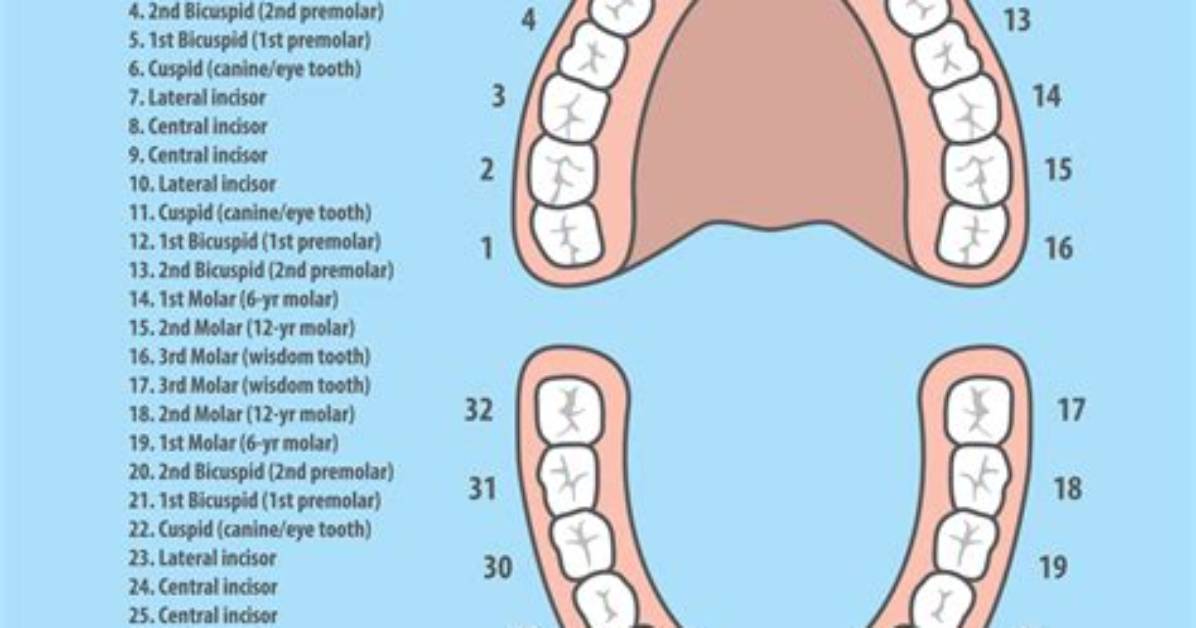
Dentists do not evaluate numbered teeth in isolation. They analyze how opposing teeth align into functional units. A comprehensive public health survey from the Healthy Finland study published in Wiley documented that maintaining an adequate count of posterior occlusal pairs, the direct contact points between upper and lower molars and premolars, governs nutritional intake, temporomandibular joint health, and overall longevity.
When an individual loses tooth #3 (upper-right first molar), tooth #30 directly below it loses its mechanical partner. Without an opposing surface to absorb bite forces reaching up to 200 pounds of pressure, #30 gradually over-erupts, drifting upward out of the jawbone over several years. Anthropological research from Britannica on primate dentition underscores why our dental map is strictly bounded: unlike polyphyodont marine predators such as sharks, which produce thousands of disposable teeth in revolving conveyor rows, placental mammals rely on two tightly specialized sets. When an adult molar is removed, the biological mapping code does not regenerate.

