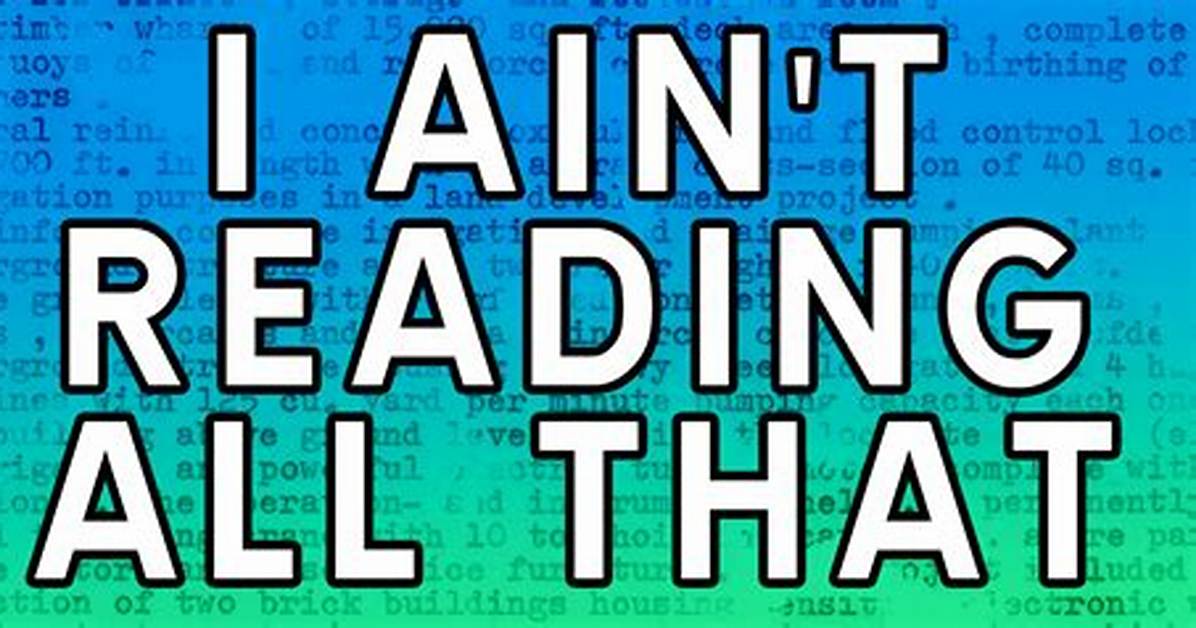
Despite its comedic utility, the meme sits in an uneasy cultural space. Its deployment falls into two starkly different camps: setting boundaries against bad-faith badgering, and shutting down legitimate public accountability.
As a boundary defense, the meme is extraordinarily effective. It cuts through "sea-lioning", the tedious online harassment tactic where bad-faith actors overwhelm a user with disingenuous questions and massive walls of dubious sources under the pretense of civil debate. Dropping the dismissive text response instantly neutralizes the trap.
Conversely, bad actors frequently deploy the meme to dismiss genuine documentation. When investigative researchers, fraud victims, or whistleblowers publish detailed evidence of financial misconduct or harassment campaigns, malicious communities flood the replies with "i ain't reading all that." In those moments, the meme ceases to be a funny joke about brevity and becomes a bludgeon for weaponized anti-intellectualism.
The tool itself remains entirely agnostic to context. It rewards brevity, punishes effort, and hands all conversational leverage to whoever cares the least.

