The contemporary American craze did not originate in New York or Chicago. It took hold in Honolulu and the coastal sprawl of Southern California. In Waikiki, lines outside noodle bars have run ninety deep since the mid-2010s, drawing tourists off the beach with the promise of affordable, scratch-made food served in minutes. For years, mainland visitors viewed those open-air kitchens as island-specific novelties. California proved the model worked anywhere.
Operators capitalized on the West Coast's demand for clean broths and customizable meals. Urban hubs across Los Angeles, Orange County, and the San Francisco Bay Area embraced the format because it broke away from formal sit-down protocols. Diners pick their base bowl, often a straightforward kake udon served with nothing more than broth and noodles, and then use steel tongs to select a rotating array of sides under warm amber heat lamps. The process takes less than ninety seconds from order to register, answering suburban consumer demand for quick, high-quality weeknight dinners.
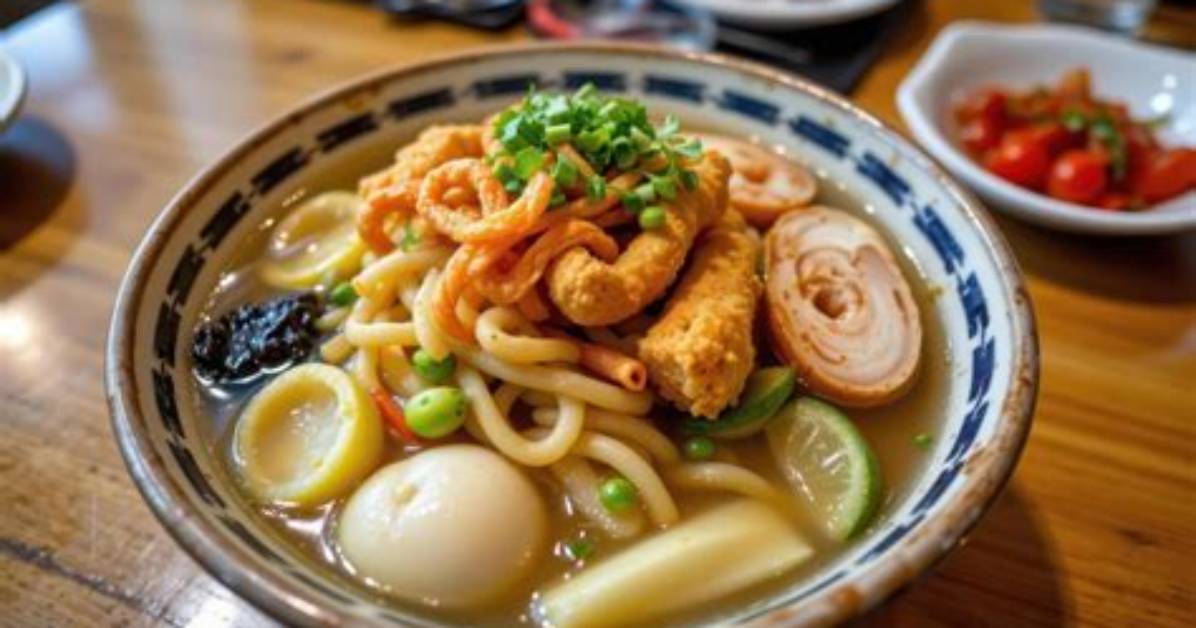
Vegetable kakiage tempura quickly emerged as a West Coast favorite. A nest of julienned sweet onions, carrots, and sweet potatoes fried into a golden cluster the size of a fist, it acts as an edible sponge inside the broth. Diners customize their bowls at condiment bars loaded with scallions, tempura flakes (tenkasu), and grated ginger, transforming basic wheat noodles into layered meals tailored to individual tastes.

