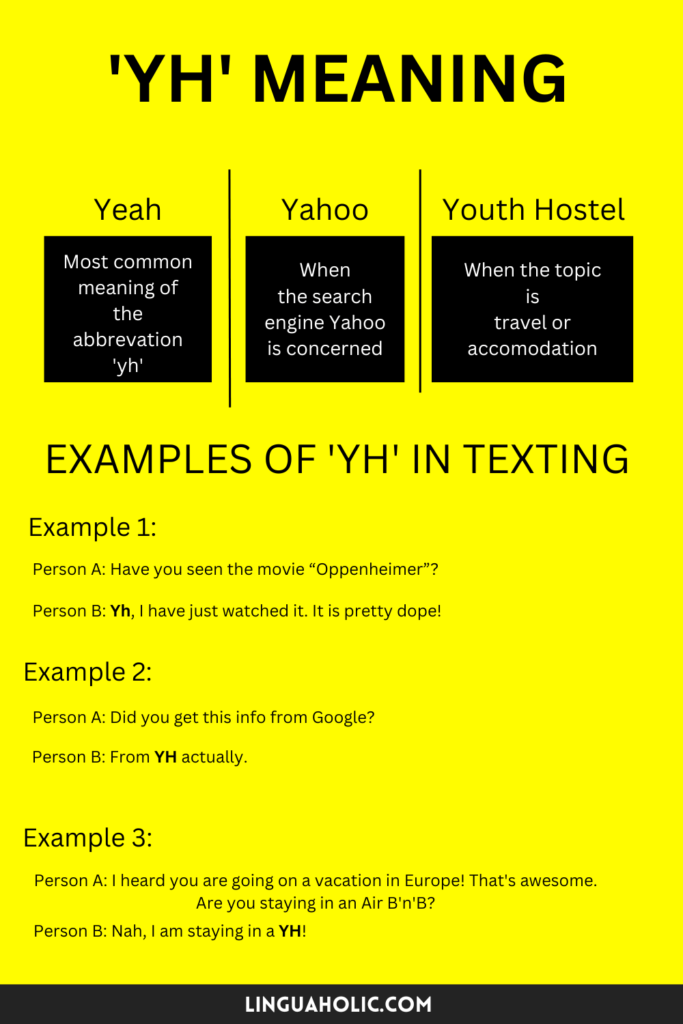
Because text messages lack vocal inflection, subtle structural choices, periods, casing, repeated letters, and ellipses, completely change the message context. Here is how common variations alter the subtext:
| Message Variant | Primary Social Subtext | Likely Sender Intent |
|---|---|---|
| yh (lowercase, bare) | Neutral acknowledgment / low energy | Multi-tasking, checking a box, or mildly disengaged. |
| Yh. (capitalized with period) | Abrupt finality / irritation | Setting a firm boundary, signaling annoyance, or shutting down the topic. |
| yh! (exclamation point) | Enthusiastic agreement | Validating an idea or confirming availability warmly despite moving fast. |
| yh... (trailing ellipsis) | Hesitation / skepticism | Doubtful agreement; equivalent to "I guess so, but I have doubts." |
| yhhh (letter extension) | Resonant alignment / hype | Strong, emotional agreement; equivalent to "Exactly, tell me about it." |
A trailing period transforms the exchange entirely. In standard English writing, periods close sentences. In mobile texting, applying a period to an isolated two-letter response registers as deliberate severity.

