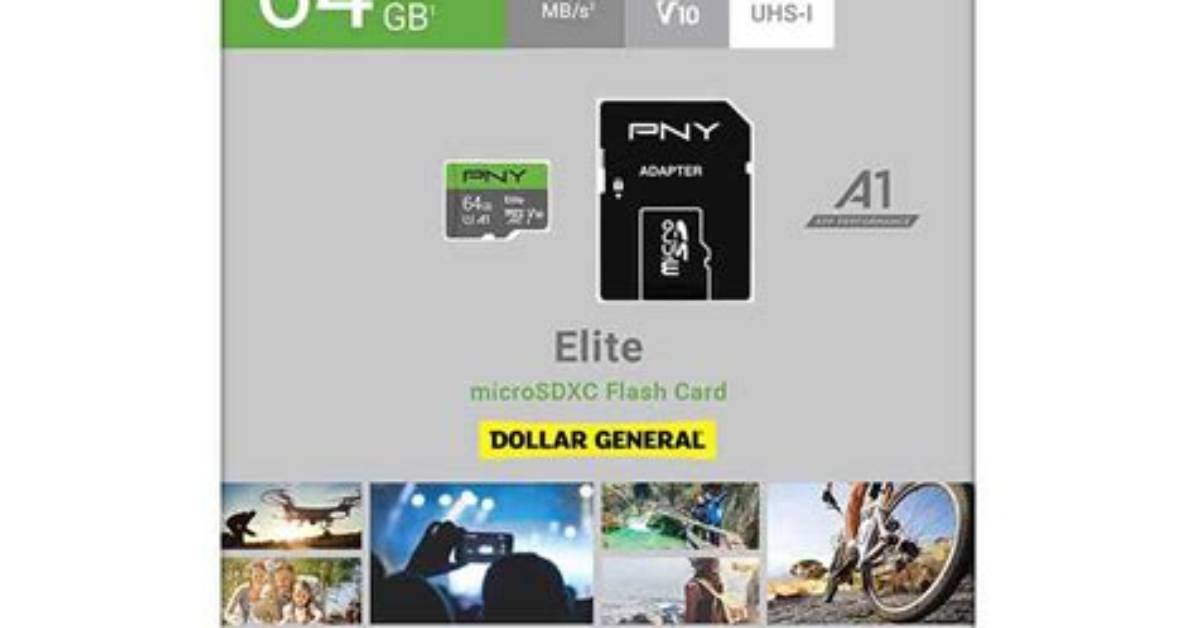
Understanding the markings on these retail packages protects buyers from unrealistic expectations. The SanDisk cards typically found on Dollar General shelves advertise speeds up to 80 MB/s or 100 MB/s. Those figures represent sequential read speeds under lab conditions. Real-world continuous write speeds generally hover between 15 MB/s and 25 MB/s.
These numbers align with basic UHS Speed Class 1 (U1) standards. They perform reliably for smartphone memory expansion, home security sensors (such as basic indoor Wi-Fi cameras), audio recorders, and portable Bluetooth speakers loading MP3 playlists. They will stumble when recording uncompressed 4K video at 60 frames per second, where sustained write rates must stay well above 30 MB/s to prevent buffer stalls.
File formatting also matters out of the box. Cards at 32GB or smaller are factory-formatted in FAT32, making them immediately recognizable by older trail cameras and budget dash cams. Cards at 64GB and 128GB arrive formatted as exFAT. If an older outdoor gadget flashes a "Card Error" message, reformatting the card to FAT32 via a computer utility resolves the issue immediately.

