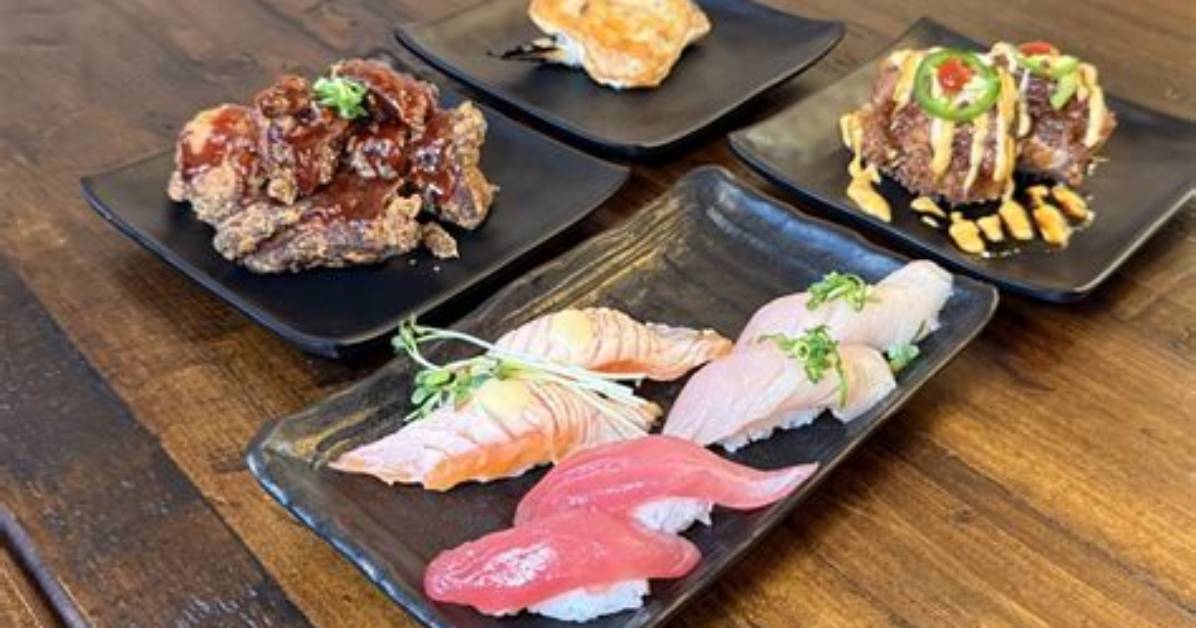
All-you-can-eat math breaks down instantly if tables camp for three hours nursing single cuts of sashimi. Sumo prevents this through strict dining guidelines:
- The 90-Minute Clock: Dining blocks run for exactly an hour and a half, with final orders called at the 75-minute mark.
- Round Caps: Tablet software limits each guest to a set number of items per transmission (typically 4, 5 individual orders per person every 10 minutes) to keep the kitchen line from crashing.
- The Leftover Surcharge: Staff strictly bill patrons $1.50 to $2.00 per piece of unfinished nigiri or sushi rolls left on the table. Eating the raw fish top and leaving mounds of discarded rice triggers the same penalty.
These operational constraints serve a dual purpose. They shield the restaurant against revenue loss while forcing guests to order intentionally rather than stacking tables with vanity piles of melting fish. Service runs briskly; empty wooden platters disappear within seconds of being cleared, replaced by freshly pressed rounds.

