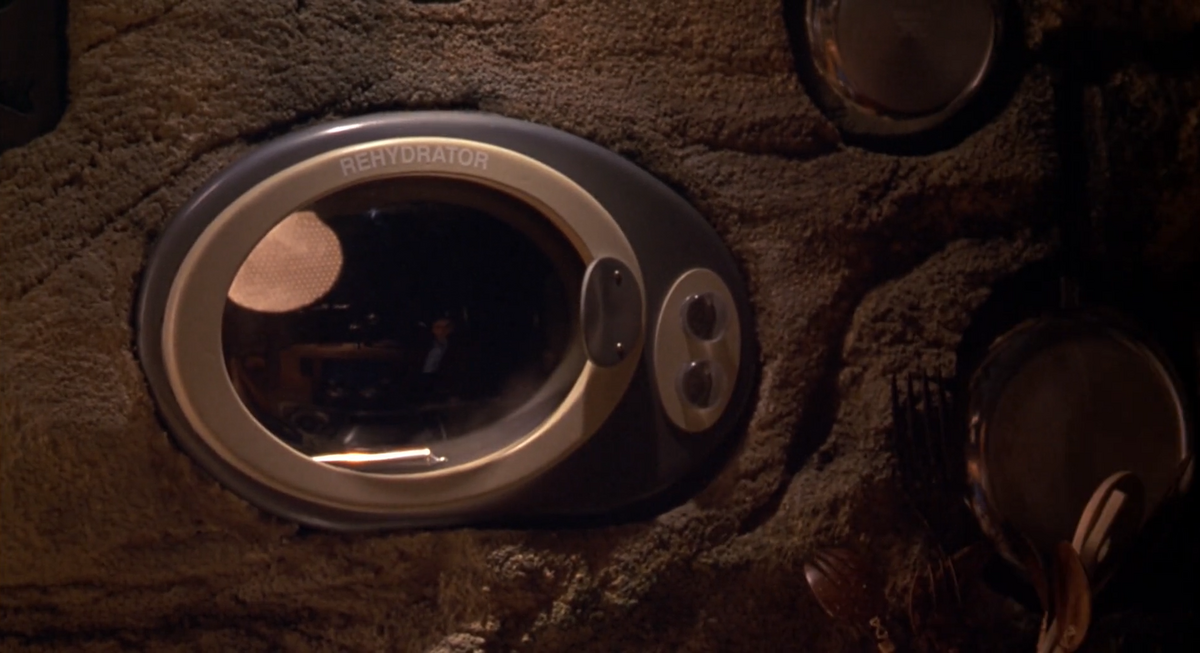
When Robert Rodriguez directed the original Spy Kids, he operated under tight budgetary and creative constraints, relying on ingenuity over costly visual effects. The famous safehouse appliance was crafted by repurposing an everyday computer tower casing, painted silver and fitted with backlighting to simulate an advanced culinary rehydrator. Inside the story, the device serves an essential narrative role: it reassures frightened children running for their lives that espionage includes perks like unlimited, instant junk food on demand.
The appliance immediately invited comparisons to another classic sci-fi appliance: the Black & Decker hydrator from 1989's Back to the Future Part II, which expanded a silver-dollar-sized disk into a steaming, family-sized Pizza Hut pie in twelve seconds. While the Spielberg-Zemeckis vision leaned into 1980s corporate consumerism, Rodriguez played to pure childhood wish-fulfillment. The scene generated lasting 2000s movie nostalgia because it took the messiest, most complex fast food items and reduced them to a pristine, zero-cleanup operation.
Internet communities still routinely obsess over the brief clip. On platforms like YouTube, retro tech reviewers and comedy channels such as Microwave Society dissect the scene's mechanics, debating whether the appliance used steam injection, chemical reconstitution, or miniature sonic cooking. Pop culture retrospectives routinely categorize the meal box alongside James Bond's Aston Martin and Batman's utility belt as quintessential gadgetry that shaped young imaginations.

