On a flat stretch of interstate, human feet make poor speed regulators. Drivers unconsciously adjust pedal pressure based on music, wandering focus, or minor cabin distractions. A driver attempting to hold 65 mph manually often drifts between 62 and 71 mph. Every unintended micro-acceleration demands a burst of fuel; every subsequent lift of the foot throws that kinetic energy away to aerodynamic drag. Steady throttle management remains the single most effective way to optimize fuel economy over extended distances.
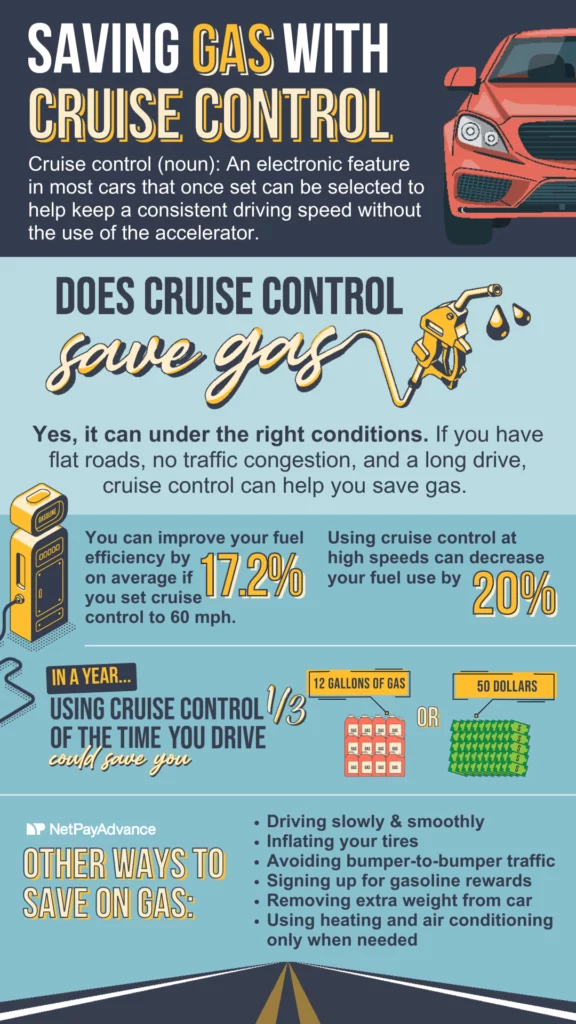
Cruise control shines in this specific operational window. By monitoring wheel speed sensors dozens of times per second, the vehicle computer makes minute adjustments to the electronic throttle body, holding manifold pressure exceptionally steady. Eliminating the human "accordion foot" cuts wasteful fuel pulses. Real-world testing consistently shows that using cruise control on flat stretches nets a 7% to 14% improvement in overall highway mileage. The engine sits comfortably in its highest gear, turning at low, steady RPMs where thermal efficiency peaks.

